Introduction
Use this guide to replace a broken or cracked screen in your iPhone 15 Pro Max.
You'll need replacement screen adhesive to complete this repair.
Note: Due to Apple's parts pairing restrictions, on iOS 17.6 and earlier, True Tone and auto brightness are disabled after a screen replacement, even when using an original Apple screen. On newer iOS versions, these features may be restored automatically. If you're using an original Apple screen, you can use Repair Assistant to calibrate it with your iPhone.
What you need
-
-
-
Unplug any cables from your phone.
-
Hold the power and either volume buttons and slide to power off your phone.
 Ask FixBot
-
-
-
If your screen or back glass is badly cracked, lay overlapping strips of packing tape over the glass to protect yourself and make disassembly easier.
-
-
-
-
-
Measure 3 mm from the tip and mark the opening pick with a permanent marker.
-
-
-
-
-
Use a P2 pentalobe driver to remove the two 7.2 mm-long screws on either side of the charging port.
-
-
-
-
-
During the next two steps, make sure you're inserting your pick in the correct location:
-
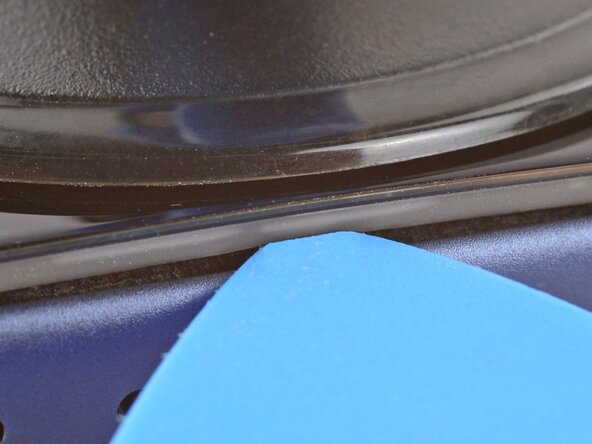
There's a plastic bezel on the underside of the screen that sits on the frame. Insert your pick here, making sure it's completely under the bezel.
-
There's a seam between the plastic bezel and the display panel. Don't insert your pick here or you'll separate the two, complicating the repair.
-
-
-
-
-
Use a hair dryer or heat gun to heat the bottom edge of the screen until it's hot to the touch.
-
-
-
Apply a suction handle to the bottom edge of the screen.
-
Pull up on the handle with a strong, steady force to create a gap between the screen and the frame.
-
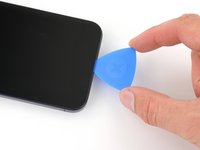
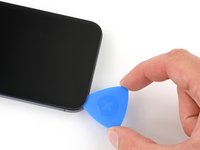
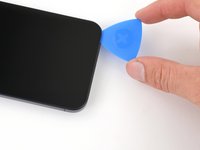
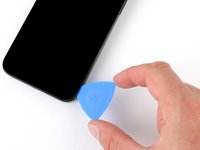
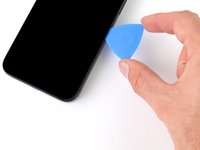
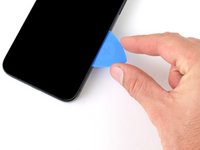
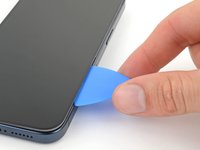
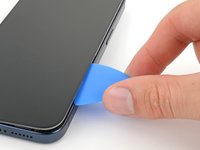
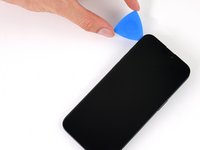
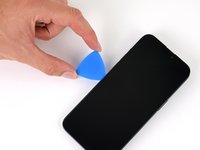
Insert the tip of an opening pick into the gap.
-
-
-
There are two delicate cables connecting the screen to the phone: one just above the action button, and the other near the middle of the left edge.
-
There are multiple spring contacts around the perimeter of the phone. Be extra careful not to insert your pick deeper than suggested in these locations to avoid bending the contacts.
-
-
-
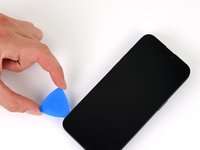
Slide your pick back and forth along the bottom edge to separate the adhesive.
-
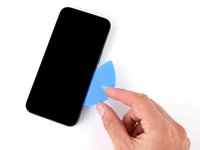
Leave your pick inserted in the bottom right corner to prevent the adhesive from re-sealing.
-
-
-
Heat the right edge of the screen until it's hot to the touch.
-
-
-
Slide your pick around the bottom right corner of the screen and toward the power button until you feel a hard stop at a clip securing the screen.
-
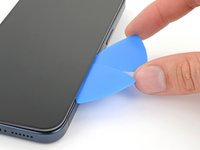
Rotate your pick so the flat edge is under the screen.
-
-
-
-
Twist the pick to increase the gap between the screen and the frame until the right clip releases.
-
Insert a second opening pick to the right of the first pick.
-
-
-
Slide the first pick back to the bottom right corner of the screen.
-
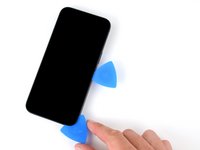
Slide the second pick to the top right corner of the screen to separate the adhesive.
-
Leave these picks inserted to prevent the adhesive from resealing.
-
-
-
Heat the top edge of the screen until it's hot to the touch.
-
-
-
Slide your pick around the top right corner and along the top edge to release the two clips and adhesive securing it.
-
-
-
Heat the left edge of the screen until it's hot to the touch.
-
-
-
Rotate your pick around the top left corner of the screen.
-
Slide your pick to the bottom left corner of the screen to separate the adhesive.
-
-
-
-
-
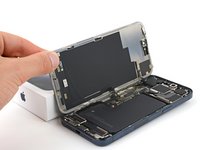
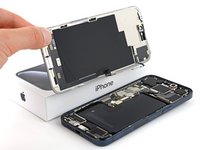
Gently swing open the screen to the left of the phone.
-
Rest the screen against a box or similar object so it doesn't strain the cables.
-
-
Tool used on this step:FixMat$36.95
-
Use a tri-point Y000 driver to remove the six screws securing the logic board cover:
-
One 2.1 mm‑long screw
-
Five 1.5 mm‑long screws
-
-
Tool used on this step:Tweezers$4.99
-
Use tweezers or your fingers to grab and slide the logic board cover toward the bottom of the phone to clear the sensor cable.
-
Remove the cover.
-
-
-
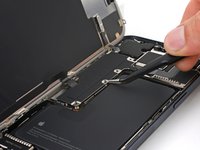
Use the tip of an opening pick to pry up and disconnect the battery press connector.
-
-
-
-
-
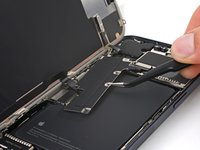
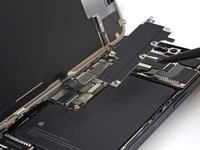
Use the point of a spudger to pry up and disconnect the ambient light sensor press connector from the top left of the logic board.
-
-
-
-
-
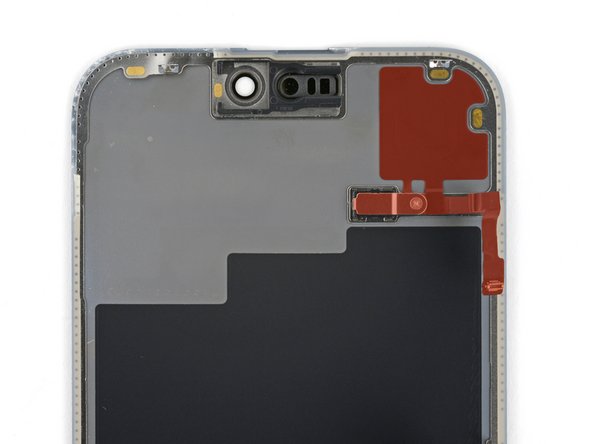
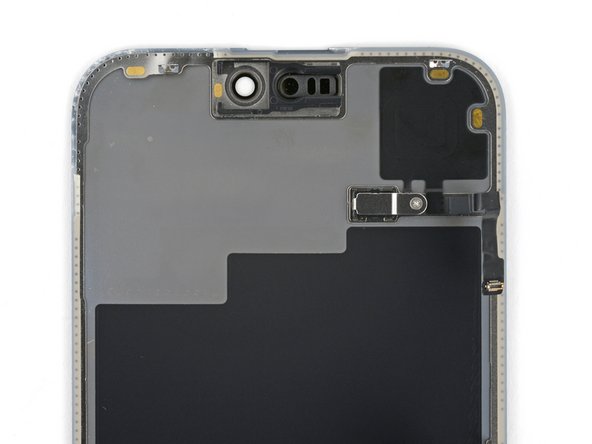
Check if your new screen comes with an ambient light sensor installed.
-
-
-
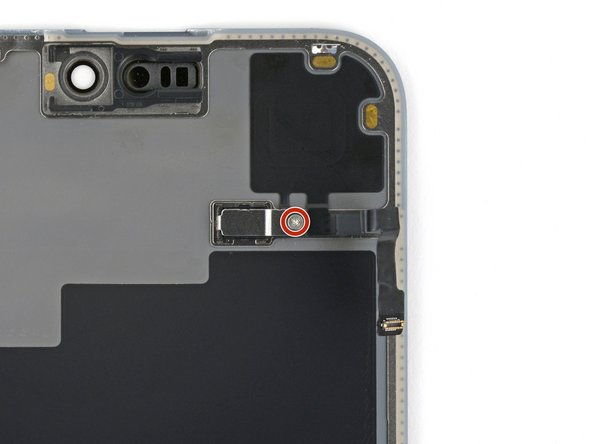
Use a Phillips #000 driver to remove the 1.4 mm screw securing the ambient light sensor cover.
-
-
-
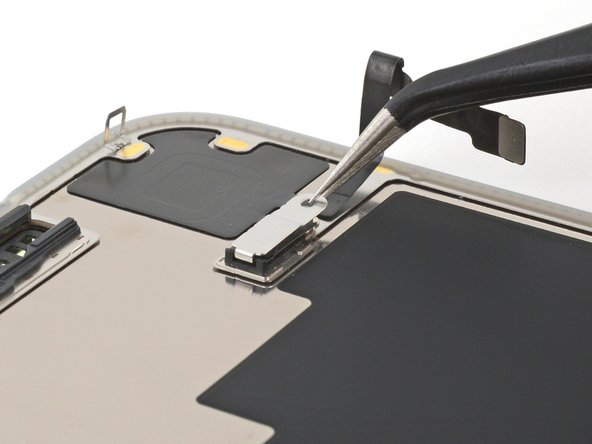
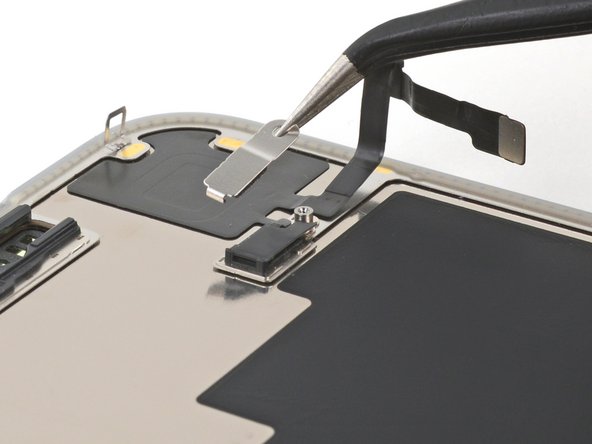
Use tweezers or your fingers to unlatch the ambient light sensor cover and remove it.
-
-
-
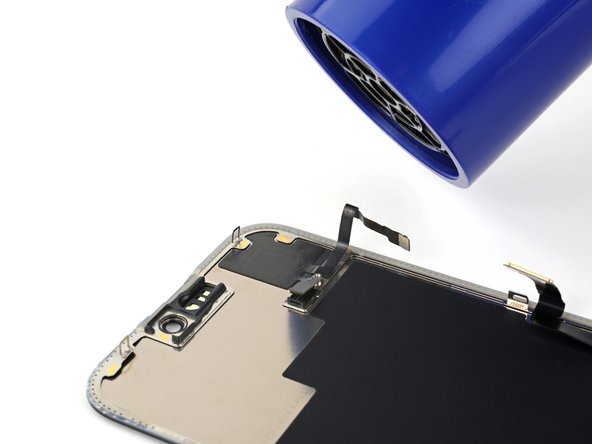
Use a hair dryer or heat gun to heat the ambient light sensor until it's warm to the touch.
-
-
-
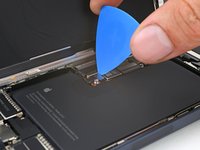
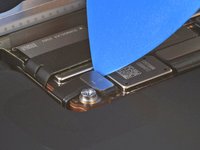
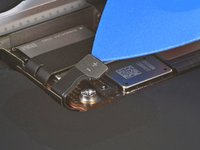
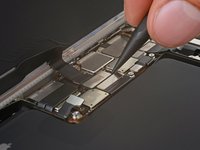
Use the tip of an opening pick to pry up the edge of the ambient light sensor out of its black plastic enclosure.
-
-
-
By this point, your sensor likely cooled down. Apply more heat until the entire glued down component is warm to the touch.
-
-
-
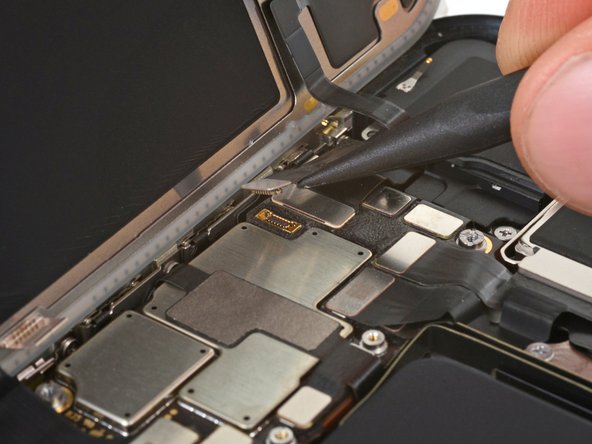
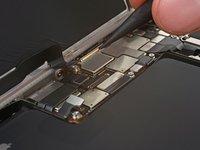
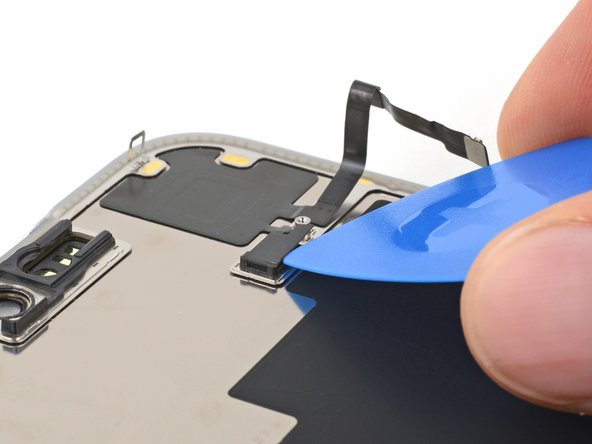
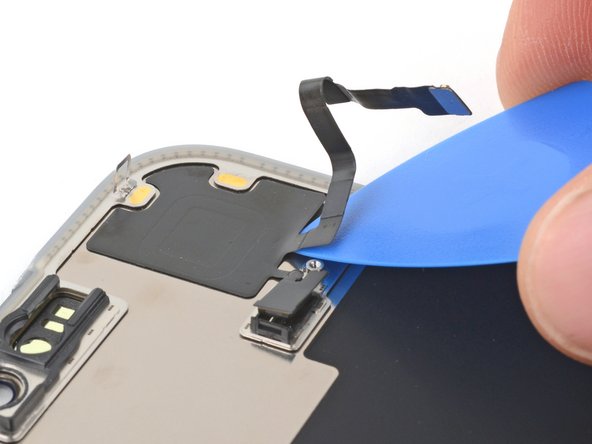
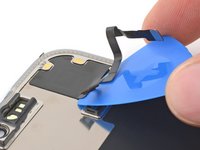
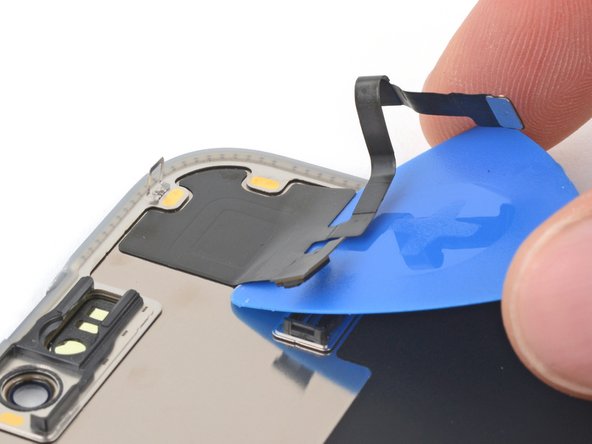
Insert the tip of your opening pick underneath the press connector cable.
-
Slide your pick back and forth underneath both cables to separate the lower section of adhesive.
-
-
-
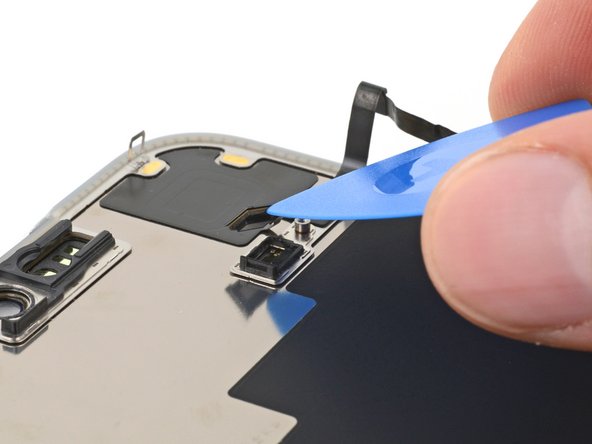
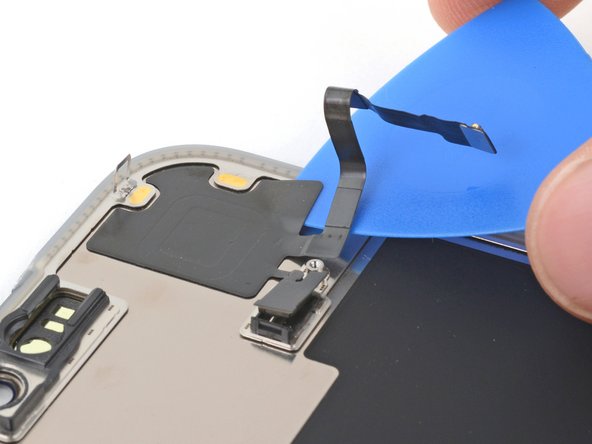
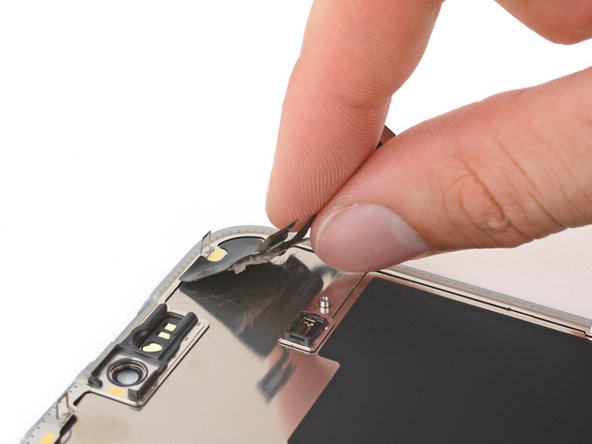
Use the flat end of your pick to slide back and forth underneath the sensor until you've separated roughly half of it from the screen.
-
-
-
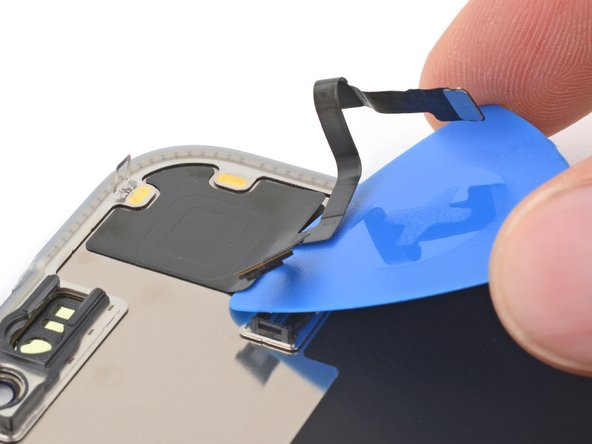
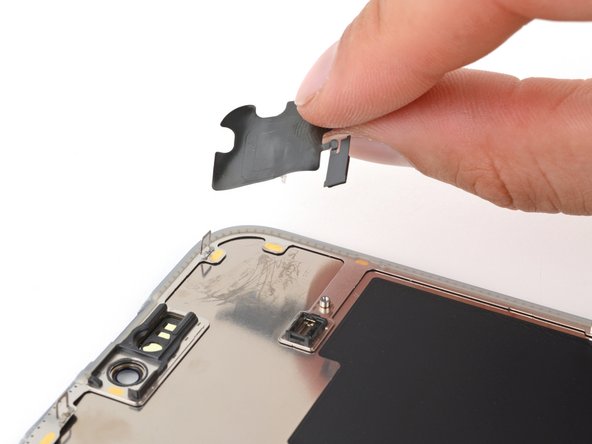
Use your fingers to grab the raised half of the sensor and peel it from the screen.
-
-










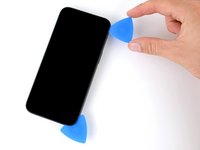


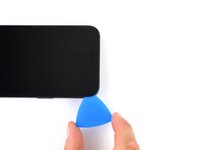
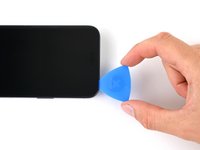
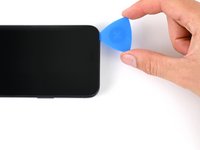


























To reassemble your device, follow these instructions in reverse order.
After your repair, depending on the replacement part, you may be able to calibrate it using Apple's Repair Assistant, available as of iOS 18. Update your device, navigate to Settings → General →About → Parts & Service History, tap Restart & Finish Repair, and follow the onscreen prompts.
Take your e-waste to an R2 or e-Stewards certified recycler.
Repair didn’t go as planned? Try some basic troubleshooting, or ask our Answers community for help.
Cancel: I did not complete this guide.
50 other people completed this guide.

Team

8 Guide Comments
Can you fix my IPhone?
Muy buenos instrucciones
My iFixit replacement screen (“Aftermarket Soft OLED”) did not include the sensor from the original display, and the guide doesn’t explain how to transfer that part. The video about swapping the light sensor on an iPhone 15 gave me the confidence to perform the same procedure on the iPhone 15 Pro Max screen sensor.
After carefully loosening the adhesive on the cable, I was able to gently pull the small tab to detach the sensor head. The remaining glue on the sensor was sufficient to secure it onto the new screen.
Thank you for the comment! We've just updated the guide accordingly with steps to remove and transfer the sensor.
I have a question, did your soft Oled 120hz display on your iphone 15 pro max still produce its 120hz capability, if so, was there anything different in the way you changed the steps. I am starting to think I got the wrong display when I ordered the soft OLED 120hz display, thanks.
