Introduction
Use this guide to replace the entire display assembly on your MacBook Pro, in order to fix a cracked or faulty screen. This assembly also includes the integrated ribbon cables that are known to fail as part of the “FlexGate” defect, so replacing it will also resolve the “stage lights” effect and other issues resulting from ribbon cable damage.
For your safety, discharge your MacBook Pro's battery below 25% before you begin. A charged lithium-ion battery can create a dangerous and uncontrollable fire if accidentally punctured.
What you need
-
-
-
Power on your Mac and launch Terminal.
-
Copy and paste the following command (or type it exactly) into Terminal:
-
sudo nvram AutoBoot=%00
-
Press [return]. If prompted, enter your administrator password and press [return] again. Note: Your return key may also be labeled ⏎ or "enter."
-
sudo nvram AutoBoot=%03
 Ask FixBot
-
-
-
-
Tool used on this step:Magnetic Project Mat$19.95
-
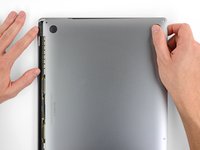
Close the display and flip the entire laptop upside-down.
-
Use a P5 Pentalobe driver to remove six screws securing the lower case, of the following lengths:
-
Four 4.7 mm screws
-
Two 6.6 mm screws
-
-
-
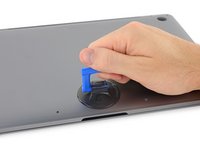
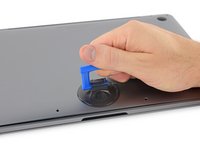
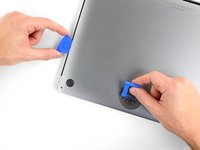
Press a suction handle into place near the front edge of the lower case, between the screw holes.
-
Lift up on the suction handle just enough to open a small gap under the lower case.
-
-
-
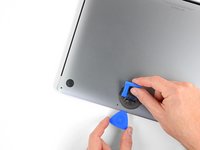
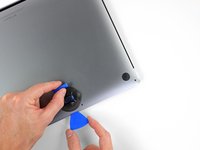
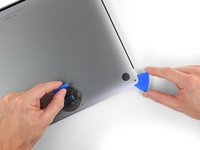
Slide the corner of an opening pick into the gap you just created underneath the lower case.
-
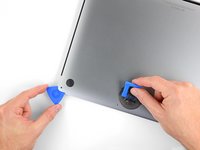
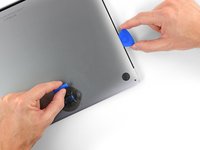
Slide the opening pick around the nearest corner and then halfway up the side of the MacBook Pro.
-
-
-
Repeat the previous step on the opposite side, using your opening pick to release the second clip.
-
-
-
Lift the front edge of the lower case (the side opposite the display hinge) just enough to slide your fingertips underneath and get a good grip on it.
-
-
-
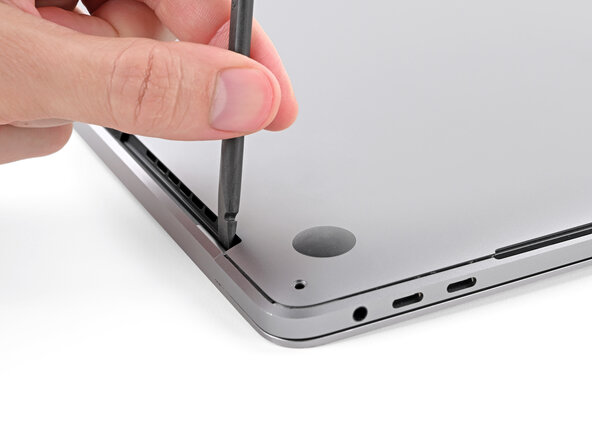
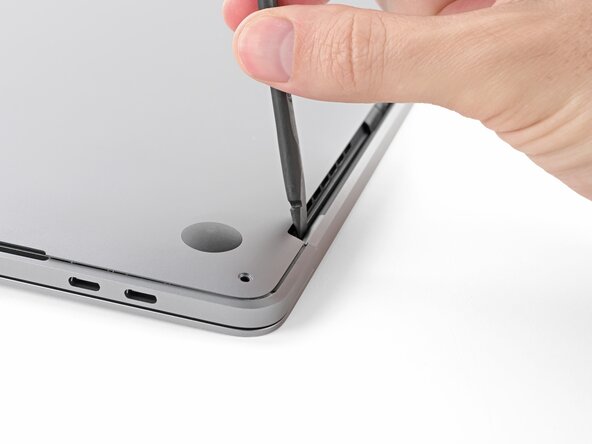
Insert the flat end of a spudger into the hinge cutout in the lower case, at the corner nearest the headphone jack.
-
Pry to lever the lower case away from the hinge area, pushing it slightly towards the front edge of the MacBook.
-
Repeat at the opposite side of the cutout.
-
-
-
Grab the front edge of the lower case again, and pull firmly to slide it towards the front edge of the MacBook (away from the hinge area), separating the last of the clips.
-
Pull first at one corner, then the other.
-
-
-
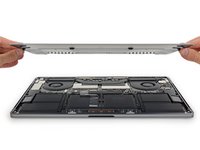
Remove the lower case.
-
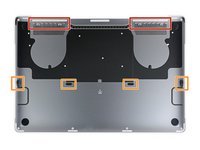
Set it in place and align the sliding clips near the display hinge. Press down and slide the cover toward the hinge. It should stop sliding as the clips engage.
-
When the sliding clips are fully engaged and the lower case looks correctly aligned, press down firmly on the lower case to engage the four hidden clips. You should feel and hear them click into place.
-
-
-
-
-
Peel up and remove the large rectangular battery board cover, on the edge of the logic board nearest the battery.
-
If the cover doesn't peel up easily, apply mild heat with an iOpener, hair dryer, or heat gun to soften the adhesive underneath, and try again.
-
-
-
-
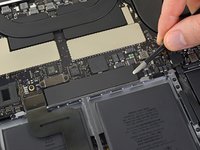
Use a spudger to gently pry up the locking flap on the ZIF connector for the battery board data cable.
-
-
-
Disconnect the battery board data cable by sliding it out from its socket.
-
Slide parallel to the logic board, in the direction of the cable.
-
-
-
Use a T5 Torx driver to remove the 3.7 mm pancake screw securing the battery power connector.
-
-
-
Use a spudger to gently lift the battery power connector, disconnecting the battery.
-
-
-
-
-
Use a T3 Torx driver to remove the two 3.5 mm screws securing the cover on the display board flex cable.
-
Remove the display board flex cable cover.
-
-
-
Use a T3 Torx driver to remove the two 1.7 mm screws securing the bracket for the display board cable connector.
-
Remove the bracket from the display board cable connector.
-
-
-
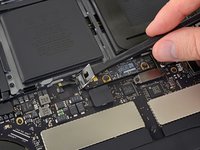
Pry straight up with your spudger to disconnect the display board flex cable.
-
-
-
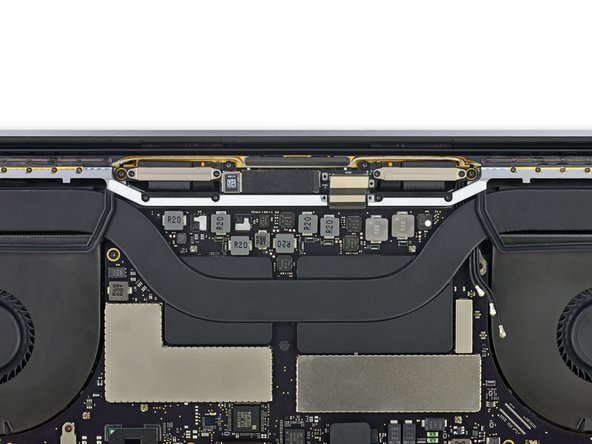
Use a T3 Torx driver to remove the two 2.0 mm screws securing each hinge cover (four screws total).
-
-
-
Use a T5 Torx driver to remove the single 2.9 mm screw securing the antenna cable bundle.
-
-
Tool used on this step:Tweezers$4.99
-
Disconnect all three antenna cables by prying each one straight up from its socket.
-
Slide your tweezers or the flat end of your spudger underneath each cable until it's near the socket, and then gently twist or pry up to disconnect it.
-
-
-
Use a T5 Torx driver to remove the four 3.3 mm screws securing the display board.
-
Make sure the display board flex cable lies on top of the board, not trapped underneath.
-
-
-
Use a P2 Pentalobe driver to remove the sixteen 1.5 mm screws securing the antenna assembly.
-
-
-
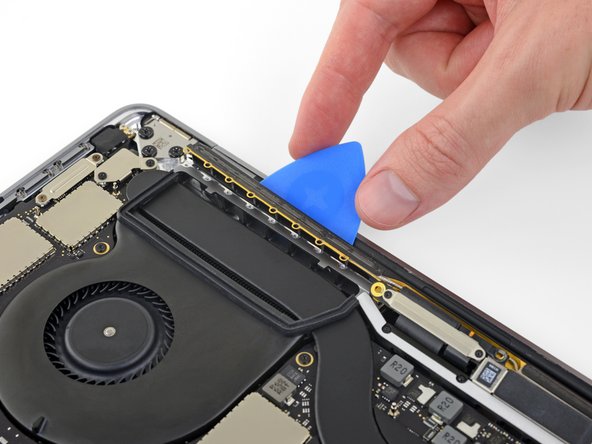
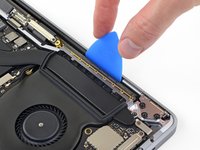
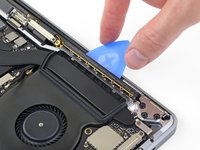
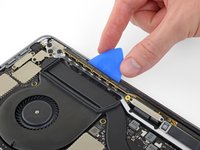
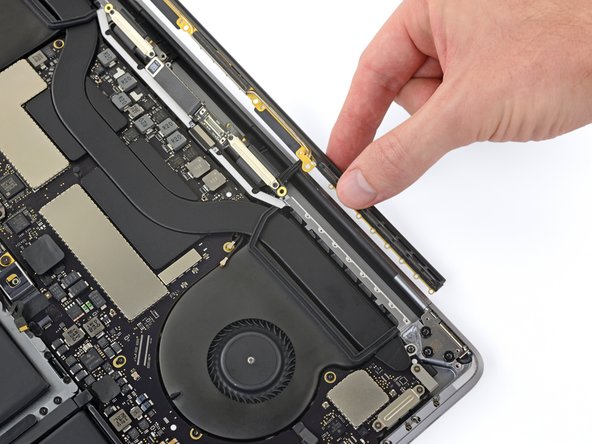
Use an opening pick to pry up the antenna assembly and separate it from the MacBook Pro.
-
-
-
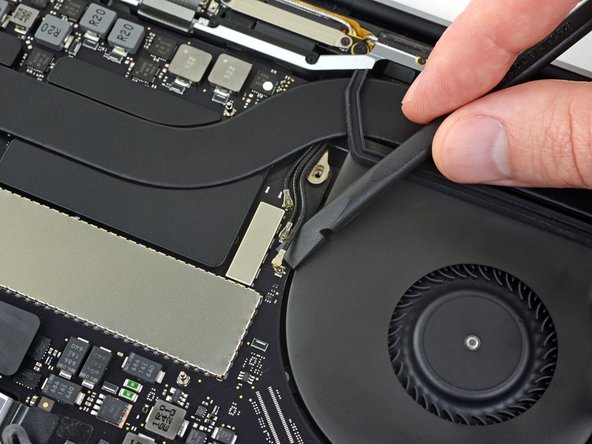
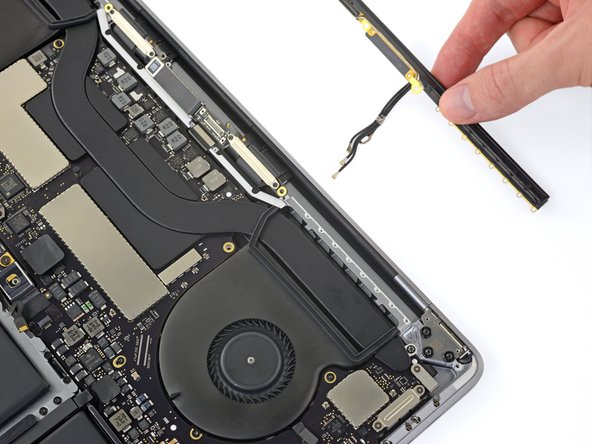
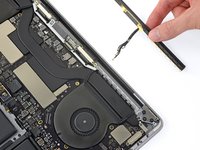
Carefully remove the antenna assembly, while simultaneously feeding the antenna cable bundle out from underneath the heat sink.
-
-
-
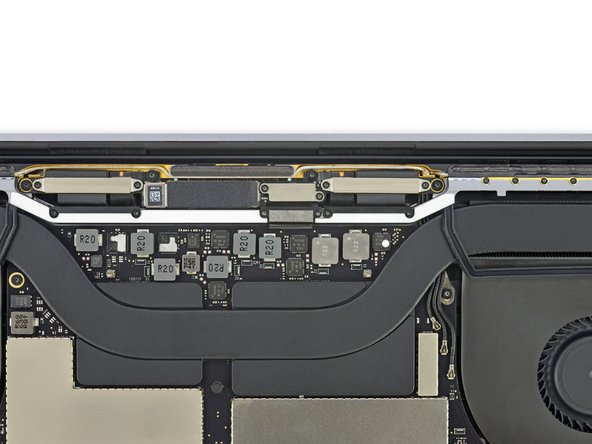
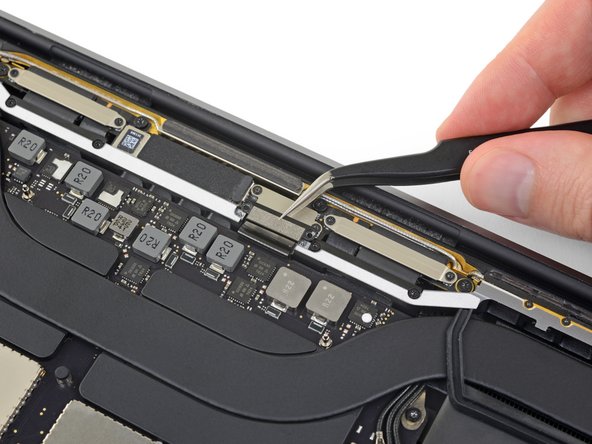
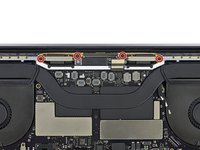
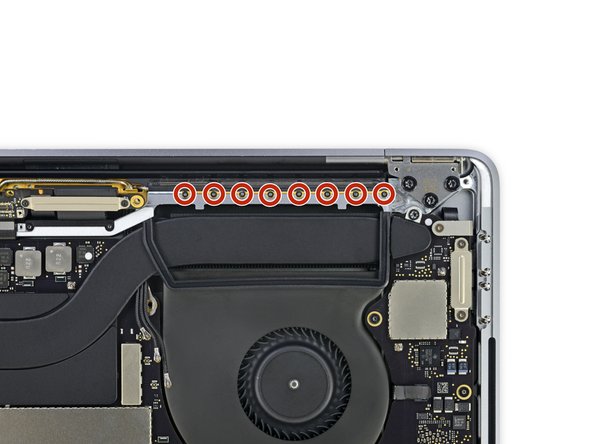
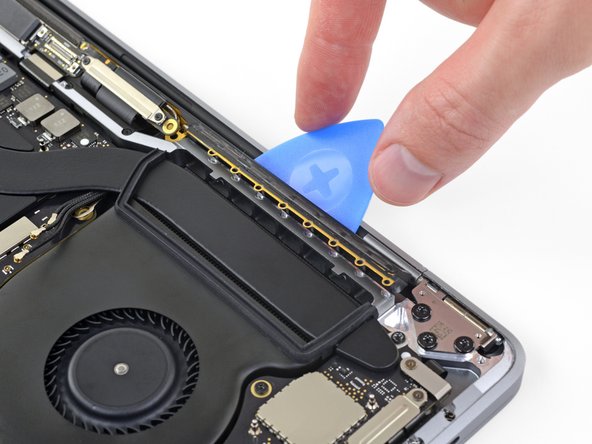
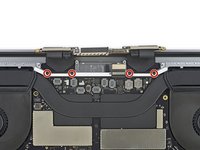
Use a T3 Torx driver to remove the four 3.9 mm screws securing the display cable cover springs.
-
-
-
Use a T8 Torx driver to remove two 4.9 mm screws from each hinge (four screws total).
-
-
-
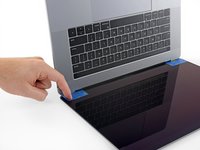
If you plan to re-use your screen, open it and apply a piece of tape to the glass directly above each hinge. This helps protect the glass from getting scratched in the following step.
-
Fully open the screen and stand your MacBook Pro up on one side.
-
-
-
Use a T8 Torx driver to remove the two remaining 4.9 mm hinge screws (one from each hinge).
-
Remove the topmost screw last, using one hand to steady both halves of the MacBook Pro to make sure they don't separate and fall over unexpectedly.
-
-
-
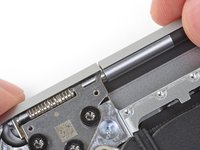
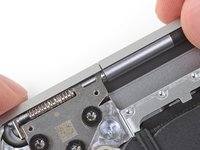
Push both halves of the MacBook Pro together so that the hinges can be lifted clear of their recesses in the chassis.
-
Push the main body of the MacBook Pro away from you while pulling the screen toward you to separate it.
-
-














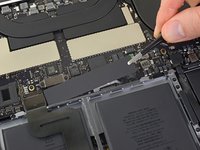


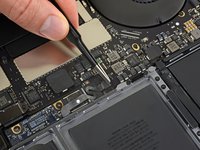
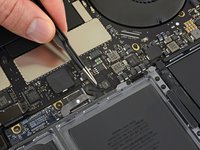


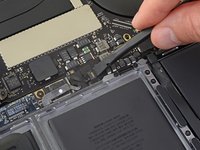
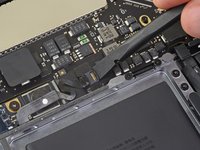
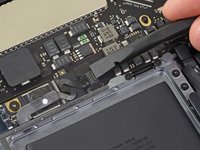


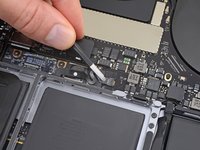
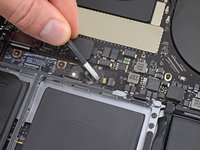


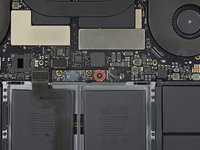
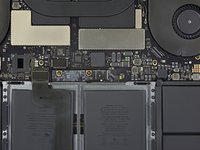

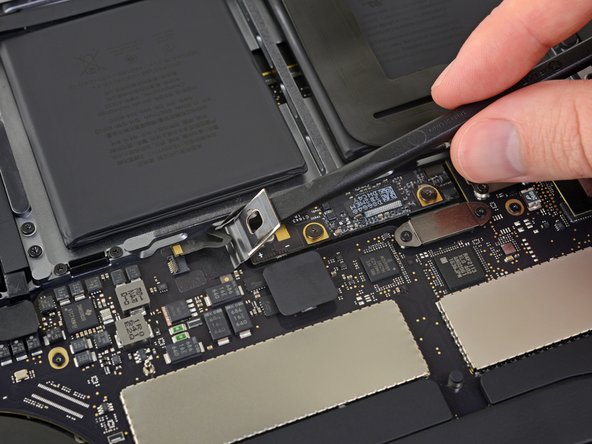

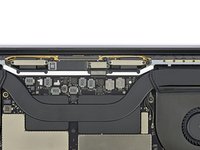
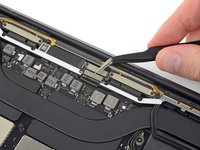


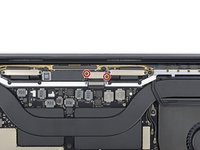
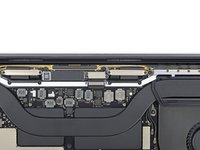
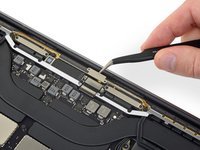


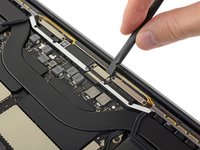
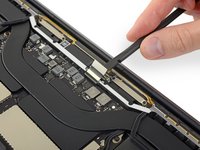


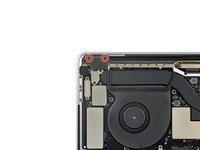
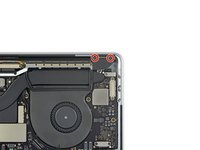


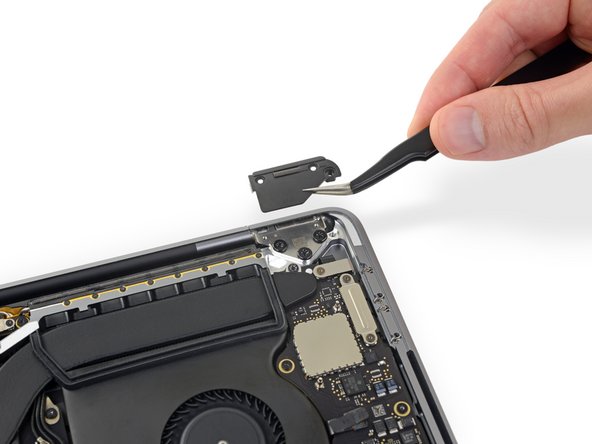
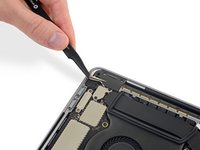
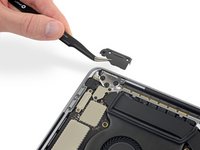
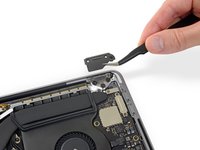

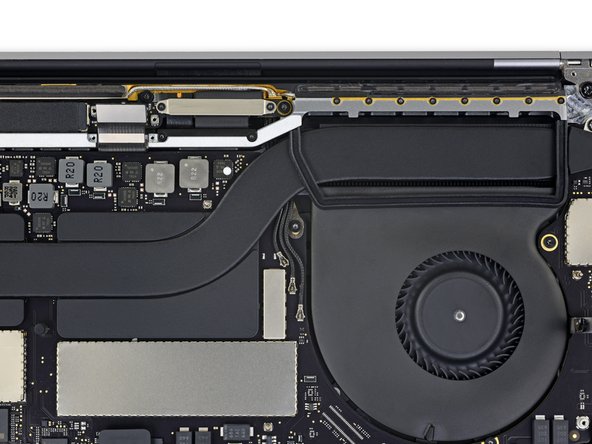





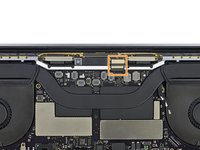




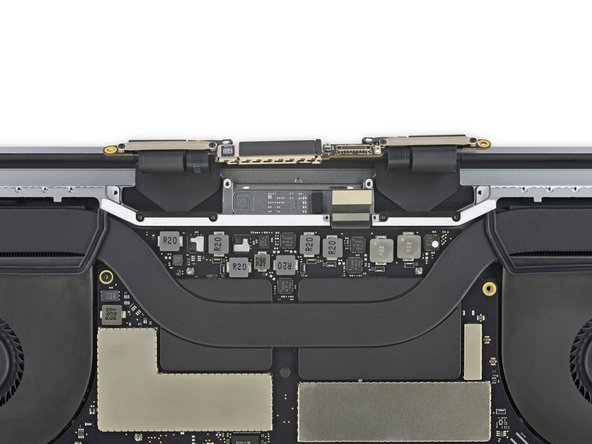

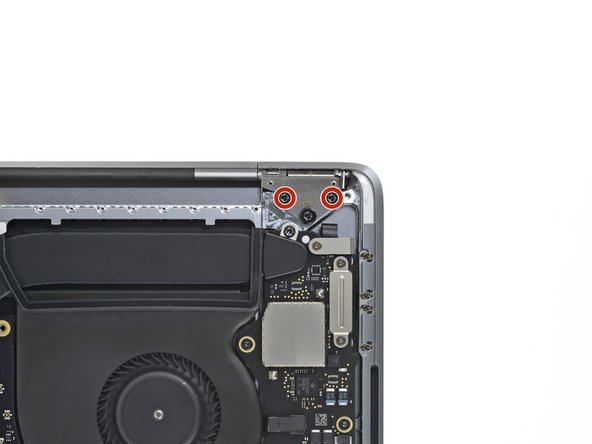


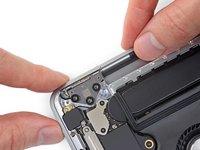


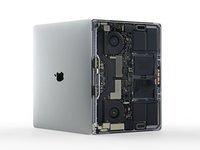


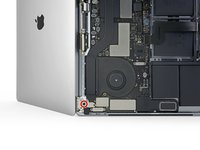
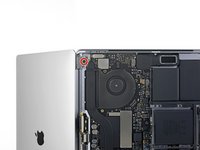
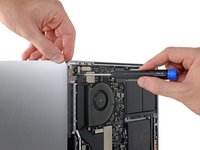


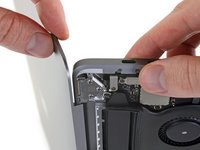
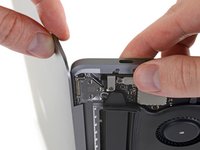
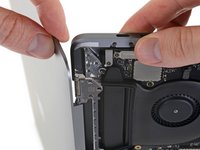

Compare your new replacement part to the original part—you may need to transfer remaining components or remove adhesive backings from the new part before installing.
To reassemble your device, follow the above steps in reverse order.
Take your e-waste to an R2 or e-Stewards certified recycler.
Repair didn’t go as planned? Check out our Answers community for troubleshooting help.
Cancel: I did not complete this guide.
48 other people completed this guide.


17 Guide Comments
Many thanks for this excellent guide, Jeff.
I completed this two months ago and it went very well - fitted a new screen to replace a smashed one and it worked perfectly… until this week. Now I need some advice please!
The new screen has developed strange ghosting and freezing and vertical lines. It started gradually and has become unusable now. I know the installation was good because it worked. I’ve checked the connections and ribbon cables - all is well, undamaged and correctly-routed. The video chip & logic board seem good because an exrternal monitor displays fine and allows me to carry on working even when the MacBook screen is frozen.
Anyone ever come across this before? I suspect it’s a faulty screen, but the sypmtoms are strange so before sending it back and finding the replacement does the same thing, I want to explore any avenues I may have missed.
Many thanks,
Mousematt
Ouch! Your troubleshooting steps sound right to me—bad display would be my guess as well. Best of luck getting it sorted out!
Great Guide! Thanks!!!
I completed the replacement by following this amazing guide about two months ago. The new display has been working great since then. However, last week I realised that my keyboard doesn’t have backlight anymore! Trying to adjust the backlight brightness gives the icon that there is no backlight.
Is there any possibility I disconnected something relating to the keyboard backlight during this display replacement?
Thanks!
A breeze until you get to the display cables and sliding them through the tiny hole that leads the cables under the heat sink and onto the logic board. We gently pry the heat sink up (be careful not to bend too far as it could cause heat sink issues) then use iFixit tweezers to pull the 3 cables through the tiny hole and onto the logic board.
