Free Shipping on Domestic Orders $75+

1.8GHz dual-core Intel Core i5 or dual-core 2.0GHz i7. (Turbo Boost up to 2.8GHz) with 3MB shared L3 cache

Diode testing and other components

Hello,

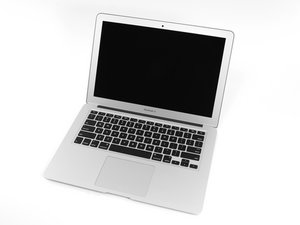
I have a Macbook Air A1466 (EMC2559). This machine had liquid damage from a large Gator Aid. After much manual cleaning I was able to get it to boot but no display. I further found that the fuse F9700 is blown. I also found that the lcd cable and connecter have been severely burned and both must be replaced. Further investigation shows there is a short at C9017. As I have been checking all the circuits I checked D9701 RB160M-60G (has a 76 on it). I did a diode test and found the following

Forward bias multimeter reads 200 Ohms

Reverse bias multimeter reads 470 Ohms

Both measurements on a Fluke meter in Diode Test mode. I also did a resistance test Forward 8K Ohms, Backward 30K Ohms. Is it safe to say this diode needs to go too?

Answered! View the answer I have this problem too

Is this a good question?

Score 0
1 Comment

I have learned that a shorted capacitor C9017 in this case, can cause faulty readings. I have ordered a replacement capacitor and will see what happens. Still looking for guidance though.

by

Add a comment

1 Answer

Chosen Solution

Diode Mode measurements are not Ohms but Volts. It’s an important distinction because the idea is to measure what the forward voltage is on a forward biased diode. Silicon based diodes have a 0.7V drop across them when properly biased however some diode types have slightly lower voltage drops (Schottky) and some multimeters don’t provide enough current in Diode Mode to fully bias the diode.

In essence, you are supposed to see some reading between 0.2V and 0.7V when forward biasing the diode and OL or ~3V when reverse biasing the diode. It sounds like your diode is bad.

However when measuring in-circuit, there is always the possibility that you are also measuring everything else that is in parallel with your diode so to be certain, remove the diode and measure it directly to see if the issue is caused by the diode or by the rest of the circuitry.

Was this answer helpful?

Score 2

3 Comments:

Minho Thank you for the correction I should know that. It also helps to put the measurement display in volts when testing in diode mode.

I am definitely making progress. I removed the burned up LCD connector, blown Fuse and the blown Capacitor. I have not yet removed the diode. I validated the short that started this mess is resolved, it was the capacitor.

Second was to test the diode (still on board). These results are more what I expected. Forward bias test reads 0.205 V and reverse bias reads OL. This implies the diode is ok, would you agree? Or do I still have to remove it and test?

by

Those readings look normal.

On most multimeters, Diode Mode automatically puts the readout in voltage mode.

by

I have a fluke 179 and I would expect that also, but I realized it was in ohms and hit the select button and it switched to volts. I have noticed that elsewhere on the meter too. Thanks again.

by

Add a comment

Add your answer

Kardacian will be eternally grateful.
View Statistics:

Past 24 Hours: 0

Past 7 Days: 6

Past 30 Days: 19

All Time: 741