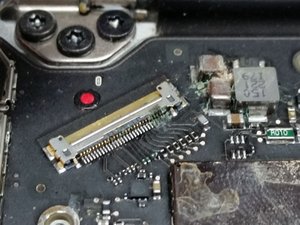
Manufacturers have long been trying to detect ways that a device may have been tampered with, or to verify that a fault is something that should be covered by warranty. Most people are familiar with warranty void if removed stickers. But a device to detect liquid damage is a little next level.
What is a Liquid Contact Indicator?
A Liquid Contact Indicator is typically a sticker affixed to the inside of an electronic device to assist in telling technicians whether or not liquid has made its way into the device interior.
- LCIs are often located near ports or vents, where liquid is likely to intrude. Devices may have several, or just one. Cell phones often have on inside the SIM slot.
- Contrary to popular belief, they do not inherently void a warranty or indicate a device has been subject to liquid damage, only that liquid touched that part of the internals.
- Conversely, they also do not mean a device hasn’t been damaged by liquid. Liquid can affect components, but entirely miss every LCI in the device.
- LCIs can be triggered by things other than explicit liquid contact. High levels of humidity (like leaving your phone in the bathroom while you shower) can also trigger them.
If you find that a liquid contact indicator has been triggered, look in the surrounding areas for sign that the electronic components have been damaged. Signs of rust or other corrosion, burn marks or liquid residue on actual components are all reasons for concern.
Types of Liquid Contact Indicators
There are a few different styles depending on manufacturer if the device. They have slightly different methodologies for interpretation.
Standard Type
The type you will find most often on electronic devices is a white sticker that turns bright red or pink when it has contacted liquid. Some will have purple hatches or "x" marks that similarly turn red or pink.

Untriggered Standard LCI

Triggered Standard LCI
Ultra Violet Light Type
Apple upped the ante in more recent years, changing their stock indicator stickers for MacBooks to ones whose status is only visible under UV light.
Untriggered UV CLIs

UV LCI in normal light

UV LCI under UV light
Triggered UV LCIs

Triggered UV LCI in normal light

Triggered UV LCI under UV light


0 Comments