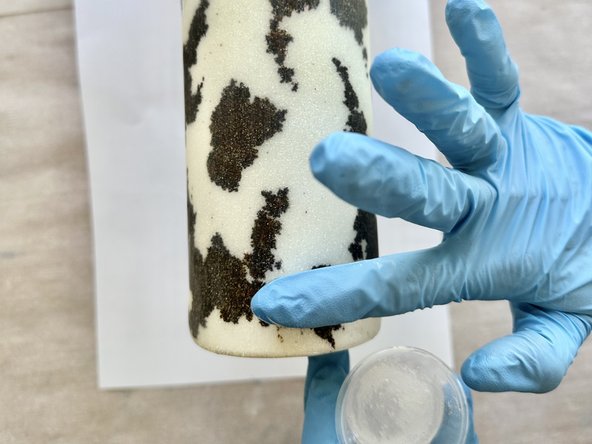
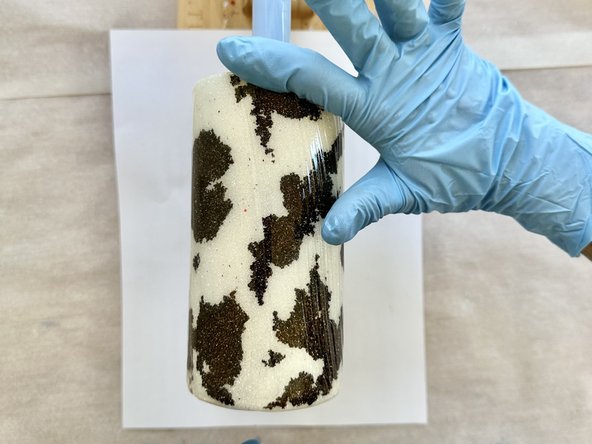
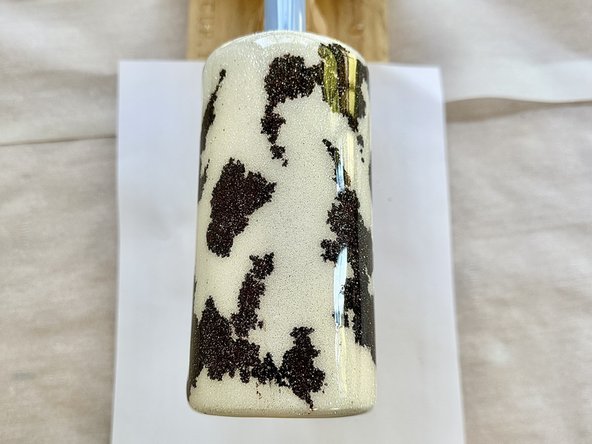
How to Repair Chipped, Cracked, or Flaking Epoxy Resin Projects

What you need

  1. How to Repair Chipped, Cracked, or Flaking Epoxy Resin Projects, How to Repair Chipped, Cracked, or Flaking Epoxy Resin Projects: step 1, image 1 of 2 How to Repair Chipped, Cracked, or Flaking Epoxy Resin Projects, How to Repair Chipped, Cracked, or Flaking Epoxy Resin Projects: step 1, image 2 of 2
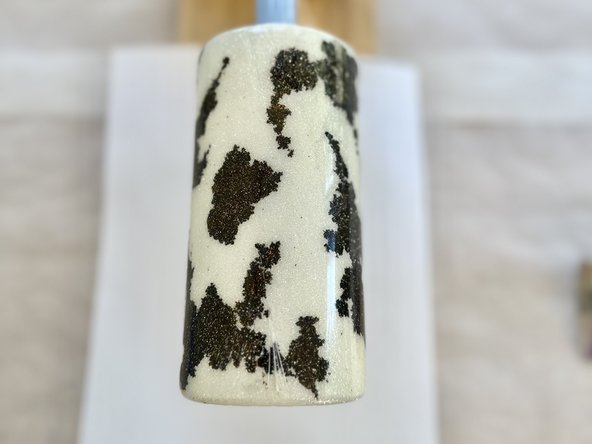
    • Place your project on the tumbler turner to evaluate why your project sustained damage.

    • For this project, a motorized turner was used while working with wet epoxy. A tumbler turner is recommended for any rounded projects to ensure even coating and curing.

    • Non-round projects can be secured using their original mold or by purchasing a mold that fits the project. If a pre-made mold isn’t available, you can easily create one using liquid silicone rubber and a disposable container, such as a takeout box or Tupperware. Liquid silicone rubber is readily available online or at most craft stores.

  2. How to Repair Chipped, Cracked, or Flaking Epoxy Resin Projects: step 2, image 1 of 2 How to Repair Chipped, Cracked, or Flaking Epoxy Resin Projects: step 2, image 2 of 2
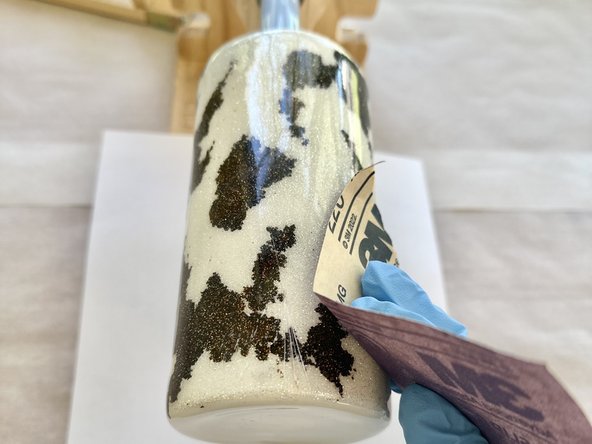
    • Lightly sand your project with 220-grit sandpaper.

    • A 220-grit sandpaper is fine enough to be gentle yet effective. Lower grit sandpaper is more abrasive and can scratch the surface layer of the epoxy. Higher grits than 220 are also suitable but may require more physical effort to achieve the desired finish.

    • Sand away any rough edges, but take care to avoid peeling off any epoxy that might be flaking or chipping.

    • If your project has flaking epoxy, lightly buff away any flakes that might break off to prevent contamination of new layers of epoxy.

  3. How to Repair Chipped, Cracked, or Flaking Epoxy Resin Projects: step 3, image 1 of 2 How to Repair Chipped, Cracked, or Flaking Epoxy Resin Projects: step 3, image 2 of 2
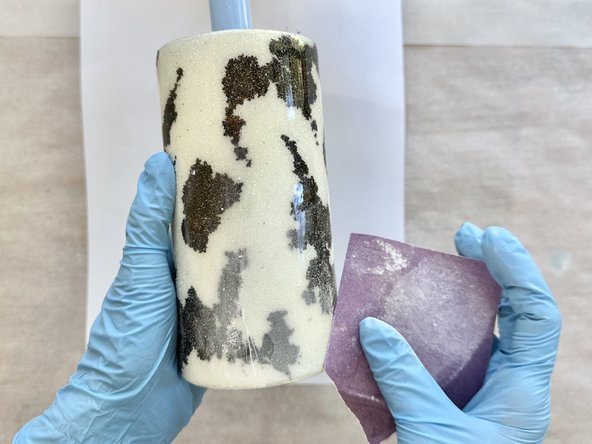
    • Once all edges are smooth, localize sanding to the affected area.

    • If your project has a crack, sand the area until you reach the affected layer. Gently buff the layer to "open up" the crack.

    • Take care to sand the edges of the crack so that it creates a smooth slope.

    • During this step, you should also lightly sand the rest of your project to ensure the next layer of epoxy resin goes on smoothly and has a good surface to adhere to.

  4. How to Repair Chipped, Cracked, or Flaking Epoxy Resin Projects: step 4, image 1 of 3 How to Repair Chipped, Cracked, or Flaking Epoxy Resin Projects: step 4, image 2 of 3 How to Repair Chipped, Cracked, or Flaking Epoxy Resin Projects: step 4, image 3 of 3
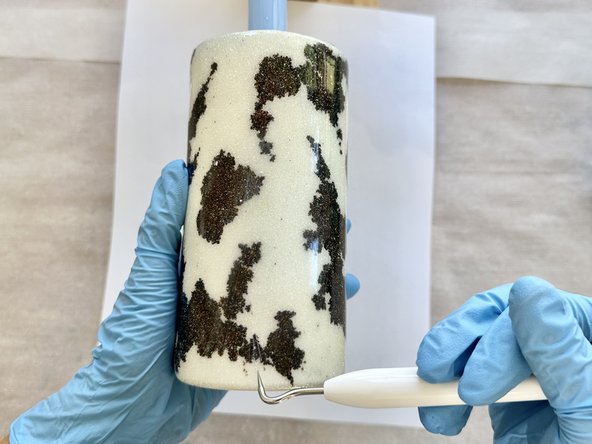
    • Using a sharp instrument such as a toothpick, precision knife, or weeding tool (as shown), gently extract any dust or debris that has settled into holes or cracks in the existing layers during sanding.

  5. How to Repair Chipped, Cracked, or Flaking Epoxy Resin Projects: step 5, image 1 of 3 How to Repair Chipped, Cracked, or Flaking Epoxy Resin Projects: step 5, image 2 of 3 How to Repair Chipped, Cracked, or Flaking Epoxy Resin Projects: step 5, image 3 of 3
    • Use 93% isopropyl alcohol to clean the sanded project.

    • Wipe away any alcohol and remaining sanding dust with a microfiber cloth.

    • A coffee filter or non-fibrous cloth will suffice if you do not have a microfiber cloth on hand.

  6. How to Repair Chipped, Cracked, or Flaking Epoxy Resin Projects: step 6, image 1 of 3 How to Repair Chipped, Cracked, or Flaking Epoxy Resin Projects: step 6, image 2 of 3 How to Repair Chipped, Cracked, or Flaking Epoxy Resin Projects: step 6, image 3 of 3
    • In a well-ventilated area, mix together your epoxy resin according to the manufacturer's directions using a medicine cup and stir stick.

    • Gloves, a respiratory mask, and any other recommended safety equipment should be worn when handling wet epoxy resin. Check the label of your epoxy resin for the manufacturer's recommendations.

    • Stir slowly in a clockwise motion, being sure to scrape the sides and bottom. Your epoxy resin is ready to use once it is completely clear.

    • It is okay if your epoxy resin has bubbles, but it should not have streaks or other indicators of undermixing.

  7. How to Repair Chipped, Cracked, or Flaking Epoxy Resin Projects: step 7, image 1 of 3 How to Repair Chipped, Cracked, or Flaking Epoxy Resin Projects: step 7, image 2 of 3 How to Repair Chipped, Cracked, or Flaking Epoxy Resin Projects: step 7, image 3 of 3
    • Focusing on the damaged part of the project, rub some of the epoxy resin into the treated area. Allow the epoxy resin to seep into any remaining cracks or holes.

    • If your project has holes or fisheyes, concentrate on filling these areas in to apply an even layer.

    • You should notice the treated area's imperfections disappear after this step if all prior steps have been performed correctly and thoroughly.

  8. How to Repair Chipped, Cracked, or Flaking Epoxy Resin Projects: step 8, image 1 of 2 How to Repair Chipped, Cracked, or Flaking Epoxy Resin Projects: step 8, image 2 of 2
    • Apply epoxy resin to the rest of your project.

    • During this step, apply enough epoxy resin to the rest of the project to create an even coating.

    • It is highly recommended to use a heat gun to pop any microbubbles that may have formed on your project.

  9. How to Repair Chipped, Cracked, or Flaking Epoxy Resin Projects: step 9, image 1 of 2 How to Repair Chipped, Cracked, or Flaking Epoxy Resin Projects: step 9, image 2 of 2
    • Allow your epoxy resin to cure in a well-ventilated area for the amount of time indicated on the manufacturer's packaging.

    • Throughout the curing process, it is recommended (but not required) that you check your project periodically. Use the heat gun to remove any bubbles that may have formed.

    • Wait until the epoxy resin is fully cured to handle your project. One it is hardened, your project is finished.

    • Fumes from wet epoxy resin can be toxic to humans and animals. For your safety and the safety of others, always follow proper safety precautions listed in this guide and on the manufacturer's label located on your epoxy resin bottles.

Conclusion

Repairing epoxy resin projects doesn't have to cost you a fortune. With a little technique, projects with chipping, flaking, or cracking can be salvaged. While this fix may not be a one-size-fits-all for all epoxy resin projects, it is great for crafting and most household DIY projects. It is important to abide by all safety guidelines listed on your resin containers. Always remember to work in a well ventilated area, use proper protective equipment, and last but not least, have fun!

Sofia Toney

Member since: 09/19/24

169 Reputation

1 Guide authored

0 Guide Comments

Add Comment

View Statistics:

Past 24 Hours: 6

Past 7 Days: 41

Past 30 Days: 149

All Time: 1,074