
2011-2016 Chevrolet Sonic A/C Refrigerant Gas Recharge

Jefrey Caal and
Last updated on Dec 20, 2023
Views: 17K
View statistics:
- Past 24 Hours:
- 4
- Past 7 Days:
- 27
- Past 30 Days:
- 161
- All Time:
- 16,693
Comments: 1
1 guide comment.
Go to guide commentsCompleted: 1 2
1 person has marked this guide "completed." Will you be next?
2 people have marked this guide "completed." Including you — great job!
Favorites: 0 1
No one has favorited (and subscribed to) this guide. Will you be the first?
1 person has favorited (and subscribed to) this guide — and that's you!
Featured Student Guide
This guide has been the hard work of our awesome students and is found to be exceptionally cool by the iFixit staff.
Introduction
Go to step 1 ↓If you've noticed your Chevy Sonic 2012's air conditioning system isn't performing up to par—blowing warm air or lacking the cooling efficiency it once had—it might be time for an A/C gas recharge. This step-by-step guide will walk you through the process in nine steps, ensuring you can restore your car's A/C system to optimal performance.
While all of the steps are necessary to execute this guide successfully, there is an emphasis on steps 2, 6, and 7, as these let the reader know of the safety precautions one should take to avoid exposure to the R134a gas.
Despite the simplicity of this guide, it is necessary to be aware that exposure to R134a gas can lead to temporary central nervous system depression, with narcosis, lethargy and anesthetic effects, severe pain and cornea damage in the eyes, and more.
Finally, it's important to mention that if after finishing this guide, your A/C car system is still not working, there might be a bigger problem going on, so it might be necessary to consult a mechanic.
What you need
-
-
-
Obtain a R134a refrigerant can, available at most auto parts stores, and an adaptor hose designed to connect the can to the car's air conditioning system.
 Ask FixBot
-
-
-
Attach the adaptor hose to the R134a refrigerant can by securely screwing it onto the can's appropriate opening.
-
-
-
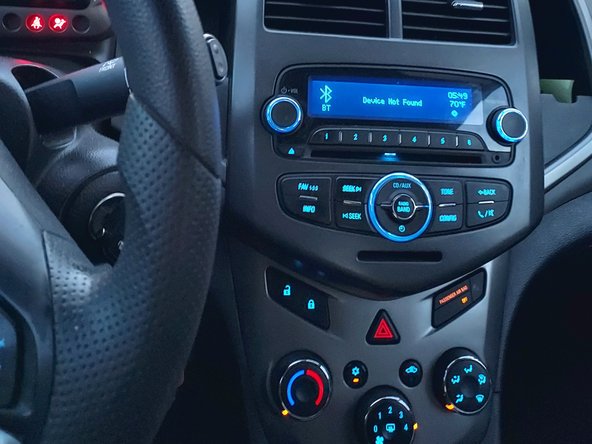
Start your car's engine and set the air conditioner to its maximum cooling setting with the lowest temperature.
-
-
-
-
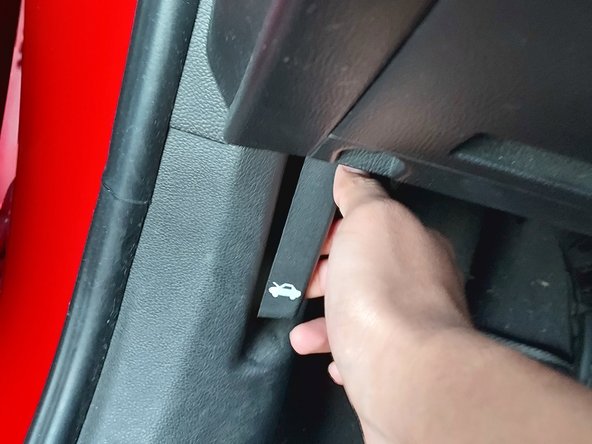
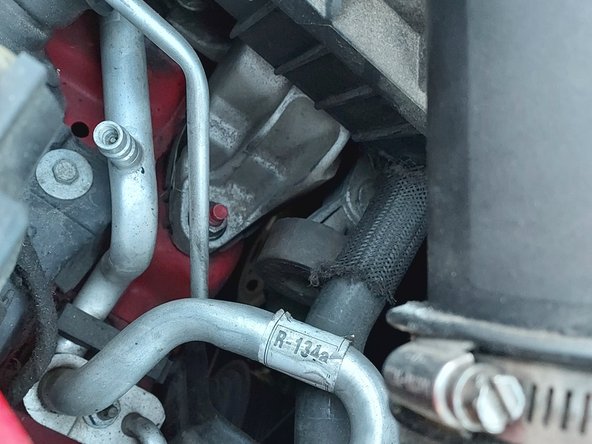
Open the hood and identify the air conditioner system hoses. There will be two; choose the one positioned lower than the other.
-
-
-
Carefully plug the trigger end of the R134a hose into the identified A/C system hose.
-
-
-
After approximately 30 seconds, close the faucet on the R134a hose to stop the flow of gas. Disconnect the hose from the A/C system hose.
-
-
-
Close the hood of the car and let the engine, and A/C run for 5 to 7 minutes. This allows the newly added refrigerant to circulate within the system properly.
-
-
-
Once the engine has run for the recommended duration, the process is complete. Your A/C system should now be adequately recharged, and it's safe to operate the vehicle.
-
-










To reassemble your device, follow these instructions in reverse order.
Cancel: I did not complete this guide.
One other person completed this guide.

Team

CSU Los Angeles, Team 2-2, Briggs Fall 2023 Member of CSU Los Angeles, Team 2-2, Briggs Fall 2023
CSULA-BRIGGS-F23S2G2
5 Members
48 Guides authored
1 Guide Comment
Please do not do this. The AC system is a closed loop system and if you're losing refrigerant you need to add dye and a small amount so you can locate the leak and perform an actual repair. However simply adding refrigerant to the low side port could cause more damage to your system than just a leak. You're also releasing ozone damaging refrigerant into the atmosphere if you're simply refilling and not repairing it. "Recharging" is not repair.
