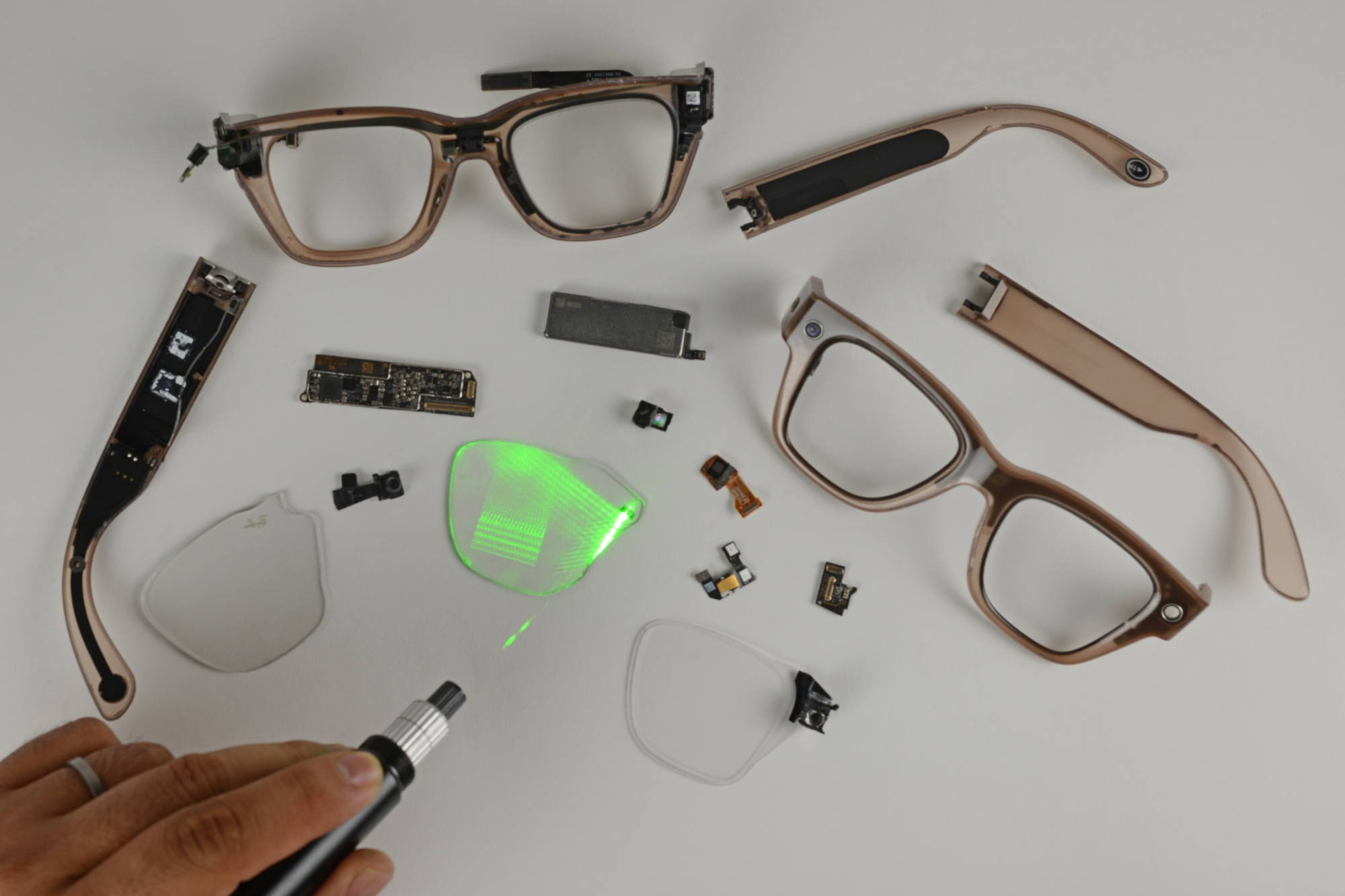

Oakley x Meta HSTN Smartglasses Teardown: Cool Shades, Tough Fix

|
No Answers 0 Score |
Why is my glasses not coming on |
|
No Answers 1 Score |
My speakers stopped working. |
|
No Answers 2 Score |
My camera is not working |
|
No Answers 0 Score |
How to fix hand connecting flex |
Smart Glasses, also known as smartglasses, are wearable devices designed to be worn on the eyes or head. They integrate advanced computing capabilities, displays, and sensors to provide users with a range of functions and features. Smart Glasses have evolved over time, incorporating technological advancements to become more capable and versatile.
The concept of smart glasses dates back to the late 20th century when companies began exploring ways to project information directly onto lenses. In 1997, Oakley, a prominent eyewear manufacturer, revealed that they had been working on such technology and had numerous related patents. However, it was not until the early 2010s that smart glasses started gaining significant attention.
In 2012, Canon introduced the MR (Mixed Reality) System, a professional-grade smart glasses solution that merged virtual objects with the real world in 3D. Around the same time, other companies and startups showcased their prototypes and concepts for smart glasses, including Viking OS by Brilliant Service, CastAR by Technical Illusions, and a 3D augmented reality glasses prototype by Atheer Labs. These early developments laid the foundation for the future advancements and commercialization of smart glasses.
Since then, smart glasses have continued to evolve and find applications in various industries. In the healthcare sector, they have been used for tele-consultation, surgical procedures, and education, providing benefits such as remote collaboration, improved safety, and enhanced training. Additionally, companies like Google, Intel, and Facebook have made significant contributions to the field with their own smart glasses projects.
As technology progresses, smart glasses are expected to become more compact, comfortable, and seamlessly integrated into everyday life. They hold the potential to revolutionize how we interact with digital information, providing hands-free access to data, communication, and augmented reality experiences.
Smart Glasses encompass a diverse range of wearable devices that offer different functionalities and features, catering to various user needs and preferences. While some smart glasses incorporate augmented reality displays, it's important to note that not all smart glasses include a display. Here are some common types of smart glasses:
It's important to note that the functionalities and features of smart glasses continue to evolve as technology advances. With ongoing research and development, new types of smart glasses may emerge, offering even more diverse applications and benefits to users in different fields and industries.
Past 24 Hours: 19
Past 7 Days: 168
Past 30 Days: 733
All Time: 20,534