Popular Forum Questions
Ask a QuestionThere are no questions. Be the first to ask a question!
Documents
In 1951, Simca broke away from Fiat designs with the Aronde, the first truly "all-Simca" car. It was a massive success, known for its stylish unibody construction and reliable "Flash" and "Rush" engines. During this time, Simca grew rapidly, even acquiring Ford’s French operations (Ford SAF), which gave them the Vedette V8 model.
Chrysler began buying shares in Simca in 1958, eventually taking full control in 1963. This era produced the brand’s most technically significant cars:
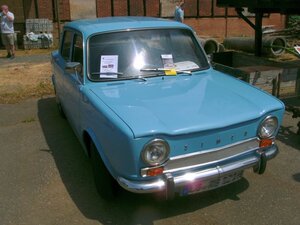
- Simca 1000: A rear-engine, rear-wheel-drive small sedan that became a cult classic and a formidable rally competitor in "Rallye" trims.
- Simca 1100: A pioneer of the modern hatchback layout. It featured front-wheel drive, a transverse engine, and independent torsion bar suspension—the blueprint for the Volkswagen Golf and almost every modern small car.
- Simca 1307 / 1308: Crowned European Car of the Year in 1976, it was a stylish, front-wheel-drive family hatchback.
By 1978, Chrysler was in deep financial trouble and sold its European operations to Peugeot (PSA) for $1. Peugeot decided to retire the Simca name, rebranding the cars as Talbot (e.g., the Simca 1308 became the Talbot Alpine). By the mid-1980s, the Talbot name was also dropped, and Simca was absorbed into Peugeot’s own designs.
If one looks at "Simca DNA" rather than the badge, the last vehicle produced using Simca’s core engineering was the American Dodge Omni and Plymouth Horizon. These cars were based on the Simca Horizon (Project C2) and continued production in the United States until 1990.