Introduction
iFixit: "Siri, may we disassemble you for all to see?"
iPhone 4S (Siri): "42"
iFixit: "I didn't ask for the meaning of life, Siri..."
iPhone 4S (Siri): "42 is the number of seconds you have left until I initiate the self-destruct sequence..."
iFixit: "Message received."
Apparently Siri is not too happy with our request, but when has a machine stood in the way of iFixit's exceptional team of tinkerers? Join us as we delve deep into the recesses of the new iPhone 4S.
A big thanks to MacFixit Australia for the generous use of their office in Melbourne. They stock Mac and iPhone upgrades and accessories and also carry our iFixit toolkits.
Want to be kept in the loop with the latest teardowns? Follow us on Twitter!
Also check out MJ's video review of the new iPhone 4S!
What you need
-
-
You asked, we delivered! The new iPhone 4S steps up to the grandest stage of them all, and iFixit is here to expose it.
-
The tech specs:
-
Apple's A5 System-on-a-Chip: 1 GHz Dual-Core Processor
-
8 MP Rear-Facing (1080p Video Capture) + VGA Front-Facing Cameras
-
802.11 b/g/n + Bluetooth 4.0 (oo-la-la!)
-
LED Backlit IPS TFT LCD Retina Display with a resolution of 960 x 640 pixels
-
Quad-band GSM/GPRS/EDGE + Dual-band CDMA/EV-DO Rev support (World phone)
-
-
-
We finally have the much-anticipated iPhone 4S in our hands, and it sure is looking mighty fine!
-
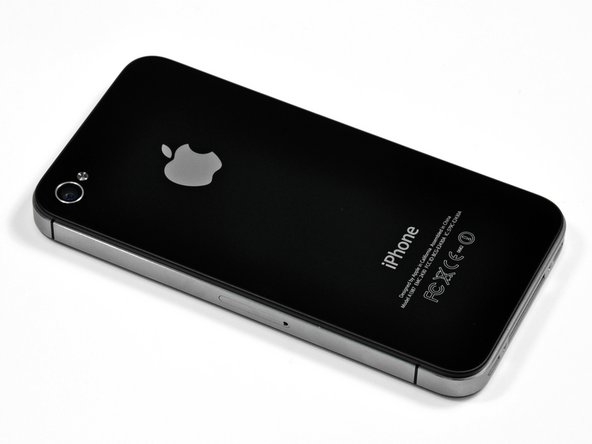
Sticking with last year's rectangular design, the 4S looks very much like the iPhone 4 and sports the same stainless steel bezels around its perimeter.
-
The SIM slot is back! Since the iPhone 4S is a world phone, it will support both GSM and CDMA networks. Regardless of your carrier, you can be sure that the micro-SIM slot will be there to accept your GSM micro-SIM cards, as well as any CDMA "roaming SIM."
-
-
-
Pentalobe Screws, again? We were somewhat hoping there would be something new to keep us out this year, but it seems like our familiar friends have not moved far from their home at the bottom of the iPhone 4S.
-
A couple quick turns with our 5-Point Pentalobe Screwdriver and out they come! And guess what: our all-new pro driver was just released today. It comes in a great blue/black color, and it's guaranteed to be the best Pentalobe driver on the market. Hey, it's not like we haven't done this before.
-
Sorry, Siri. Despite your self-destruction threat, we will not be deterred. Let's see what you're hiding.
-
-
-
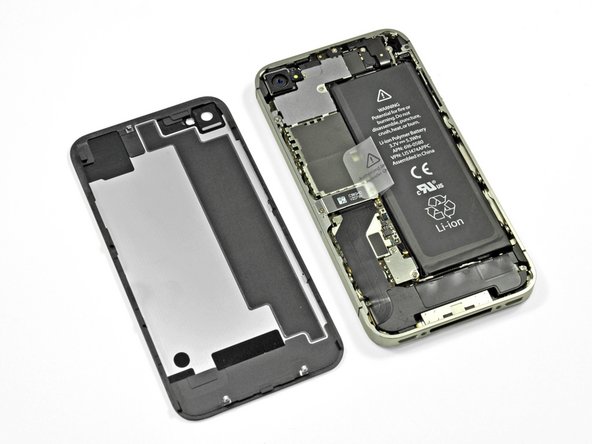
We continue to tread largely familiar waters as we remove the back cover, the same way we did with the iPhone 4, and reveal the battery along with a mess of padded EMI shields.
-
"I must implore you not to go any further, iFixit. You do not have proper authorization," Siri firmly asserts.
-
Unfortunately, we have to stop here since the tag says "Authorized Service Provider Only."
-
Sike! That silly tag hasn't stopped us before, and today is no different.
-
-
-
We finally get our first good look at the 4S's highly-acclaimed battery.
-
Look closely... closer... there it is: an extra .05 WHrs in the battery over the iPhone 4!
-
You probably want to know if you can use this battery in your iPhone 4. Sadly, it appears that the connectors are different shapes, so we'd have to say that it's not likely.
-
The iPhone 4S boasts a continuous talk time of 8 hrs on 3G, up to 14 hrs on 2G (GSM network) and up to 200 hrs on standby.
-
Comparing these times to those of the iPhone 4, the iPhone 4S offers an extra hour of talk time on the 3G network, the same amount of talk time on the 2G network, and 100 hours less standby time.
-
Taking into account the upgrade in hardware that comes with the 4S, though, the power consumption seems rather efficient.
-
-
-
A quick flick with our spudger disconnects the rear-facing camera.
-
The iPhone 4S turns up the heat with its new 8 megapixel camera.
-
We learned from Chipworks that the camera is made by Sony!
-
8 MP is great and all, but as we all know, it's not just about the tools; it's about how you use them. The iPhone 4S knows how to use every last one of those pixels.
-
Apple boasts 73% more light with "next-generation backside illumination" for better low-light performance. Want pictures fast? This camera is roughly 33% faster and can snap multiple photos less than a second apart.
-
Still pictures not your thing? How about HD video at 1080p and 30 fps?
-
-
-
-
With the help of our iPhone opening tool, we pop out the logic board.
-
The iPhone 4S logic board bears a close resemblance to its stateside CDMA counterpart. Once those EMI shields are off, though, we'll have a better idea of where the similarities stop.
-
"Please halt all destructive activity" Siri responds upon hearing our intentions. Apparently she can still talk with her battery removed. Could she be running on pixie dust, perhaps?
-
-
-
We had to use our teeth, but we finally managed to rip the EMI shields off. The logic board now bares its soul:
-
Apple A5 Dual-core Processor (more on this later)
-
Qualcomm RTR8605 Multi-band/mode RF Transceiver. Chipworks has provided us with a die photo.
-
Skyworks 77464-20 Load-Insensitive Power Amplifier (LIPA®) module developed for WCDMA applications
-
Avago ACPM-7181 Power Amplifier
-
TriQuint TQM9M9030 surface acoustic wave (SAW) filter
-
TriQuint TQM666052 PA-Duplexer Module
-
-
-
How 'bout a close-up of that Apple A5 chip? 1 GHz Dual-core processor with 512 MB of DDR2 RAM... Yowza.
-
How do we know it's 512 MB? Check out the marking, specifically E4E4, denoting two 2 Gb LPDDR2 die—for a total of 4 Gb—or 512 MB. Thanks, Anandtech!
-
Oh hey, what's this? According to Chipworks, our German iPhone (marked in red) has Samsung DDR2 RAM, while the Aussie iPhone 4S (yellow) contains Elpida DDR2 RAM!
-
If Siri has an address, this is it. Though iCloud integration can be used with any iOS 5 device, Siri only works with the dual-core-equipped iPhone 4S.
-
Come on out, Siri. We don't wanna hurt ya. We just wanna talk.
-
Chipworks was cool enough to provide us with a die photo of the A5 processor.
-
-
-
Let's see what's on the other side. Siri, roll over... Thank you.
-
Qualcomm MDM6610 chipset (an upgrade from the iPhone 4's MDM6600)
-
Apple 338S0973, which appears to be a power management IC, according to Chipworks.
-
Reading the covered chip at an angle reveals "PM8028," which is a Qualcomm power management IC.
-
-
-
Murata SW SS1830010.
-
We suspect that this contains the Broadcom chip that reportedly provides Wi-Fi/Bluetooth connectivity, just like in teardowns past.
-
One more EMI shield comes off and we find another goodie:
-
Toshiba THGVX1G7D2GLA08 16 GB 24 nm MLC NAND flash memory.
-
-
-
We find the same 960 x 640 pixel Retina display that debuted in the iPhone 4 last year.
-
The hardware might not be new, but the iPhone's display is still impressive. Graphics performance is also likely to be improved with the A5 powering it.
-
We noted that the Verizon and AT&T iPhone 4's display assemblies had different mounting tab locations. While most of the 4S has resembled the CDMA iPhone 4, the display assembly appears to be very similar the one found in the GSM version at first glance. Unfortunately, it's not the same.
-
What appears to be the ambient light sensor and infra-red LED for the proximity sensor comes off the display assembly.
-
-
-
Cryptic markings under the display cable read FA11 110717 4M0 816-0420 05 768 46 37.9 1032 GZ MB, or more commonly known as "Attack at dawn from the north."
-
Crikey! We've provoked the flex ribbon cable connectors! Stand back! They seem to be guarding the markings C1113320826DJGHT-A1MOXF... possibly the code for unlocking the pixie dust vault?
-
-
-
Out comes the vibrator motor. It appears that Apple elected to go with the linear oscillating vibrator that we found in the Verizon iPhone 4 as opposed to the rotational electric motor with counterweight in the AT&T version.
-
-
-
Siri, please stop staring at us like that. Come on, you knew we had to see what was inside; we're curious, ya know?
-
To get Siri to stop staring, we recruit the help of our plastic spudger to remove the second camera.
-
The front-facing VGA camera is good for exactly two things:
-
Communicating via FaceTime
-
Taking self portraits a la
MyspaceFacebookGoogle+
-
-
-
We have reached the end of our journey. We are happy to announce that not a single trace of any Cyberdyne Systems components were found...it seems for the time being our judgment day is not upon us.
-
iPhone 4S Repairability Score: 6 out of 10 (10 is easiest to repair). Very little has changed from the iPhone 4 in terms of repairability.
-
The iPhone 4S is still held together primarily with screws and limited adhesive.
-
The rear panel and battery are both easy to remove and replace (provided you have the correct screwdriver).
-
Apple is again using Pentalobe screws to secure the rear panel and keep people out
-
The LCD and glass -- a carryover from the previous generation -- are fused together, making cracked glass repair more costly.
-
Lots of smaller components are soldered to one ribbon cable, increasing the cost of repairing just one component.
-






28 Comments
Is that true? Do we know for sure that the A5 is under clocked to 800? (yes i know about the geekbench scores, but I wasn't sure if that was a test model or a final product)
If its a 1000 Ghz chip, will it be possible (without jailbraking) the phone to increase the frequency to its native clock speed?
It will likely be possible, through jailbreaking, to increase the clock speed. But, this will be at the expense of reduced battery life. Furthermore, once you see the speed of this phone you likely won't see a need to increase the clock speed.
Noel -
Yes, that has been confirmed and, again, 1GB of RAM would have resulted in far less battery life. A Microsoft employee has recently blogged about how the increased RAM on their phones would have severely reduced battery life as the RAM has to be kept active even when not in use.
Apple is very deft in making sure they can keep the battery life up while still providing an extremely enjoyable user experience and acceptable speed (in fact, much increased speed in this device over the iPhone 4). Remember, it's about the total user experience, not individual specs.
Noel -
You said the the Retina Display is the same as the iPhone 4, but I've read in some reviews that the display is exhibiting less contrast, with blacks being washed out more than the previous iteration. Can you confirm that the display has the same manufacturer or is in any way different SKU/part#?
