Free Shipping on Domestic Orders $75+

Troubleshooting DIY cable reels.

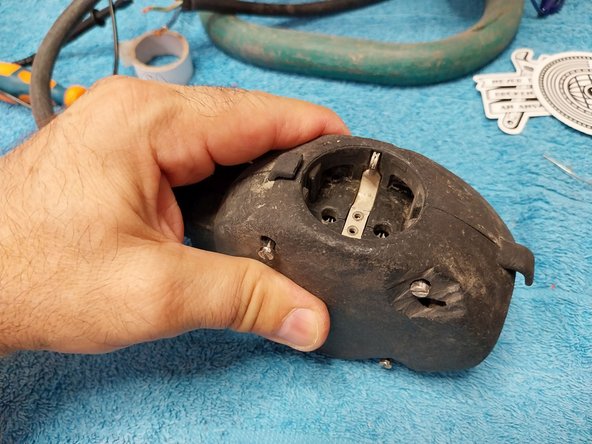
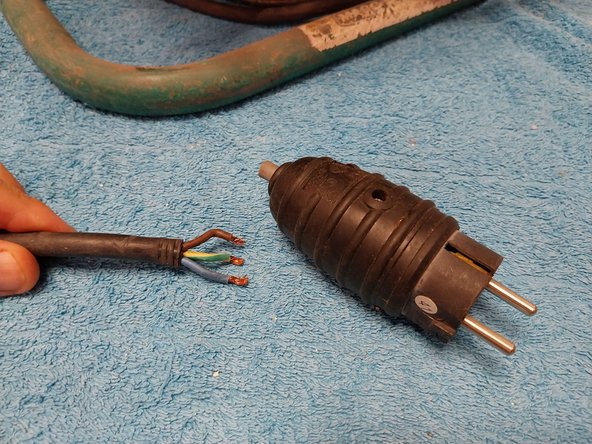
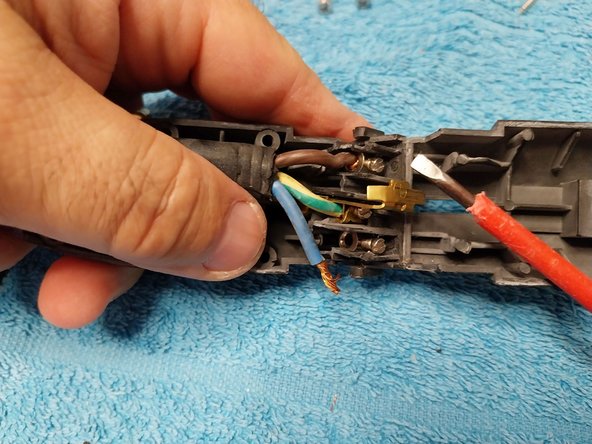
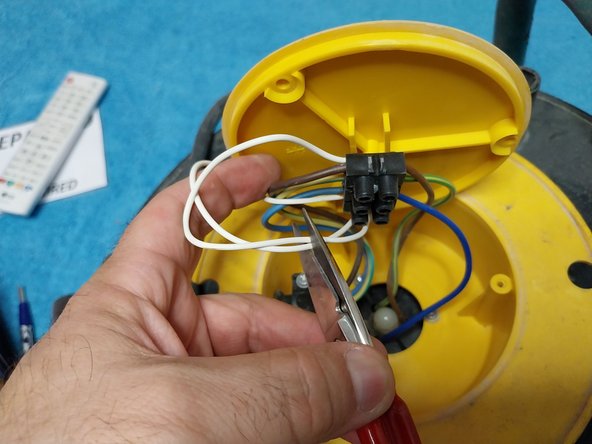
  1. Troubleshooting DIY cable reels., extension reel: step 1, image 1 of 3 Troubleshooting DIY cable reels., extension reel: step 1, image 2 of 3 Troubleshooting DIY cable reels., extension reel: step 1, image 3 of 3
    • Coil cables that do not output voltage, review and locate the problem, step by step.

  2. Troubleshooting DIY cable reels.: step 2, image 1 of 3 Troubleshooting DIY cable reels.: step 2, image 2 of 3 Troubleshooting DIY cable reels.: step 2, image 3 of 3
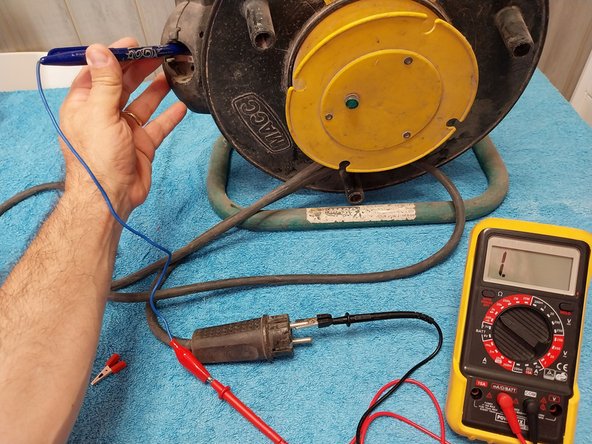
    • We will use a multimeter on the OHM scale, Beep = Continuity scale, to check:

    • First we check if we have a short circuit between the 2 poles of the plug socket.

    • We check if we have a derivation or connection with ground (Earth) of the socket base.

  3. Troubleshooting DIY cable reels.: step 3, image 1 of 3 Troubleshooting DIY cable reels.: step 3, image 2 of 3 Troubleshooting DIY cable reels.: step 3, image 3 of 3
    • To check the continuity of the 3 Phase – Neutral – Ground cables, we connect one tip of the multimeter to a pin on the plug socket and the other lead of the multimeter to the output plug socket.

    • To make the checking task easier for you, since the terminals are very thick and the multimeter can give us more connections, I use an adapter or homemade tool.

    • It's nothing more than a pen with a pin or thick tip for a plug. The truth is that it's great for this.

  4. Troubleshooting DIY cable reels.: step 4, image 1 of 3 Troubleshooting DIY cable reels.: step 4, image 2 of 3 Troubleshooting DIY cable reels.: step 4, image 3 of 3
    • Checking between input and output, we see that grounding and one of the punctures has continuity, the other cable does not have continuity, the multimeter does not perform measurement.

    • Photos 1 and 2: Cable NOT OK open.

    • Photo 3: Cable OK

  5. Troubleshooting DIY cable reels.: step 5, image 1 of 3 Troubleshooting DIY cable reels.: step 5, image 2 of 3 Troubleshooting DIY cable reels.: step 5, image 3 of 3
    • Detail of the 2nd cable of the plug socket, ok with continuity.

    • If you are not clear about the continuity measurement, here it is explained with several different multimeters:

    • https://www.youtube.com/watch?v=8hXeg-ne...

  6. Troubleshooting DIY cable reels.: step 6, image 1 of 3 Troubleshooting DIY cable reels.: step 6, image 2 of 3 Troubleshooting DIY cable reels.: step 6, image 3 of 3
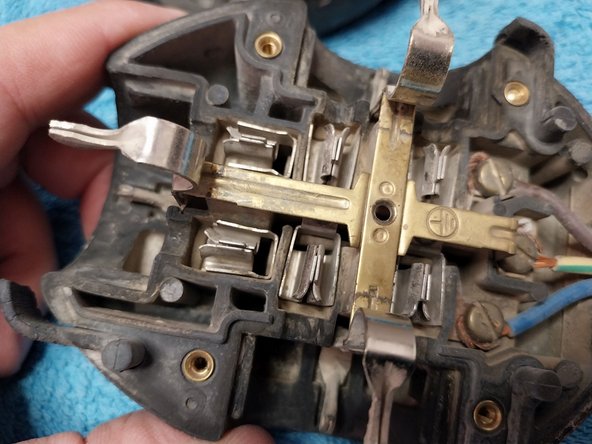
    • Checked that we have a cut cable, we proceed to dismantle the plug base to check the state of the cables, the checks are nothing more than dismantling part by part and discounting possible problems.

    • We open the socket by removing the side screw.

  7. Troubleshooting DIY cable reels.: step 7, image 1 of 3 Troubleshooting DIY cable reels.: step 7, image 2 of 3 Troubleshooting DIY cable reels.: step 7, image 3 of 3
    • Step 1, bend the cable, checking to see if any deformed parts are visible.

    • 2. In this case we observe that the plug socket is broken, so we will proceed to replace it, but before doing so, we will carry out other checks.

  8. Troubleshooting DIY cable reels.: step 8, image 1 of 2 Troubleshooting DIY cable reels.: step 8, image 2 of 2
    • We remove the plug socket, which I replace in step 26.

  9. Troubleshooting DIY cable reels.: step 9, image 1 of 3 Troubleshooting DIY cable reels.: step 9, image 2 of 3 Troubleshooting DIY cable reels.: step 9, image 3 of 3
    • We spend an hour checking the condition of the plug base, we start already observing the electrical tape at the end, so it is not the first repair you have already suffered.

    • In this case we dismantle it with a flat screwdriver.

  10. Troubleshooting DIY cable reels.: step 10, image 1 of 3 Troubleshooting DIY cable reels.: step 10, image 2 of 3 Troubleshooting DIY cable reels.: step 10, image 3 of 3
    • Open the base, we see that it is of quite good quality, and that the interior is in apparent good condition, so we will focus on the cable, release the cable press.

  11. Troubleshooting DIY cable reels.: step 11, image 1 of 3 Troubleshooting DIY cable reels.: step 11, image 2 of 3 Troubleshooting DIY cable reels.: step 11, image 3 of 3
    • We will repeat the operation of step 4 and 5, this time to focus the problem on a specific cable.

    • Photo 1: Blue Neutral OK

    • Photo 2: Earth Taking, Yellow OK.

    • Photo 3: Phase, Brown cable, NOK the multimeter does not measure on Ohms scale, cut cable.

  12. Troubleshooting DIY cable reels.: step 12, image 1 of 3 Troubleshooting DIY cable reels.: step 12, image 2 of 3 Troubleshooting DIY cable reels.: step 12, image 3 of 3
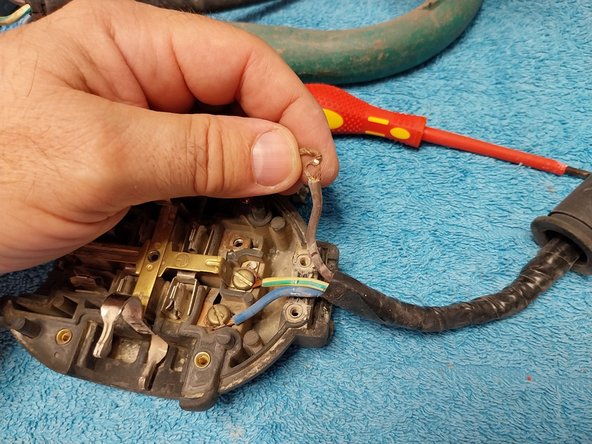
    • Photo 1: We remove the screw that holds the cable.

    • Photo 2: With the cable loose, we try to stretch it, the cables usually break in the next folds, when a cable breaks internally at the end it appears to be OK, but if we stretch it, we see that the plastic cover, it stretches like gum, until it breaks, LOCATED THE POINT WHERE THE FAILURE IS.

  13. Troubleshooting DIY cable reels.: step 13, image 1 of 3 Troubleshooting DIY cable reels.: step 13, image 2 of 3 Troubleshooting DIY cable reels.: step 13, image 3 of 3
    • Photos 1 and 2: We see how far the cable has broken.

    • Photo 3: Since all this part of the cable has already had a previous repair and has electrical tape, I will proceed to remove it to start from a part of cable in good condition.

  14. Troubleshooting DIY cable reels.: step 14, image 1 of 3 Troubleshooting DIY cable reels.: step 14, image 2 of 3 Troubleshooting DIY cable reels.: step 14, image 3 of 3
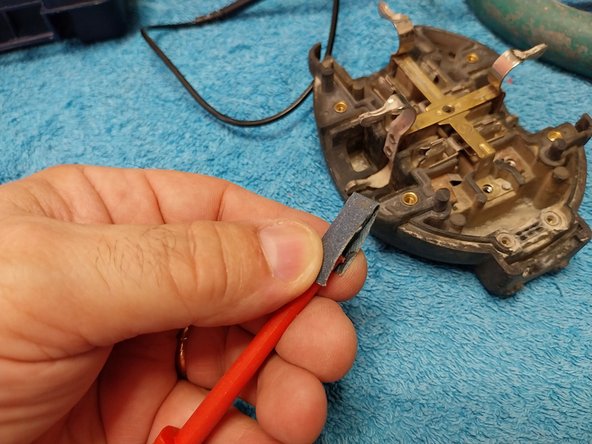
    • I proceed to release the other 2 cables and since the connections are free, I take the opportunity to clean the electrical contacts with a piece of fine sandpaper, held at the tip of the screwdriver.

  15. Troubleshooting DIY cable reels.: step 15, image 1 of 3 Troubleshooting DIY cable reels.: step 15, image 2 of 3 Troubleshooting DIY cable reels.: step 15, image 3 of 3
    • Photo 1: The 3 clean "shiny" contacts

    • Photos 2 and 3: We see that the remaining cable was really in bad condition, cracked.

  16. Troubleshooting DIY cable reels.: step 16, image 1 of 3 Troubleshooting DIY cable reels.: step 16, image 2 of 3 Troubleshooting DIY cable reels.: step 16, image 3 of 3
    • We cut the damaged piece and measure at the base to determine what portion of the rubber cover needs to be removed.

  17. Troubleshooting DIY cable reels.: step 17, image 1 of 3 Troubleshooting DIY cable reels.: step 17, image 2 of 3 Troubleshooting DIY cable reels.: step 17, image 3 of 3
    • Using the scissors, carefully make some light "bites" to peel off the rubber sheath. Once marked, stretch it.

    • We peel 1 cm or a little more from the end of the 3 cables.

  18. Troubleshooting DIY cable reels.: step 18, image 1 of 3 Troubleshooting DIY cable reels.: step 18, image 2 of 3 Troubleshooting DIY cable reels.: step 18, image 3 of 3
    • Once the cable is stripped from approximately 1 cm to 1.3 cm, we separate the wires in half and half and braid them.

  19. Troubleshooting DIY cable reels.: step 19, image 1 of 3 Troubleshooting DIY cable reels.: step 19, image 2 of 3 Troubleshooting DIY cable reels.: step 19, image 3 of 3
    • We put the screw and braid the cable around it.

    • The same for the 3 screws.

    • So we can place them already in the socket base, but if we have an electronics and tin welder, it does not hurt and gives a very professional finish, applying a welding point at the end of the tram so that it does not come loose when pressing.

  20. Troubleshooting DIY cable reels.: step 20, image 1 of 3 Troubleshooting DIY cable reels.: step 20, image 2 of 3 Troubleshooting DIY cable reels.: step 20, image 3 of 3
    • We connect the 3 cables to the socket base.

  21. Troubleshooting DIY cable reels.: step 21, image 1 of 3 Troubleshooting DIY cable reels.: step 21, image 2 of 3 Troubleshooting DIY cable reels.: step 21, image 3 of 3
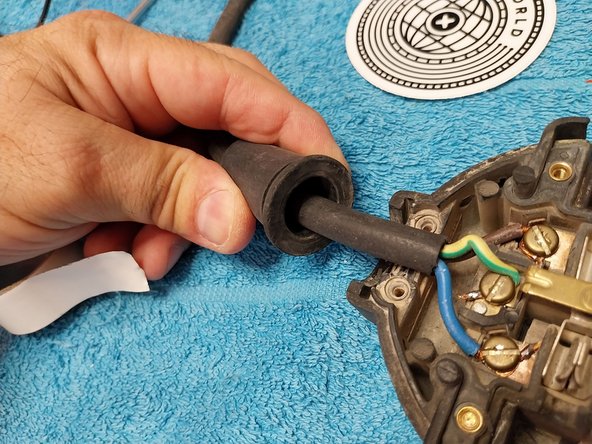
    • Now it is the turn of the rubber cover, it passes walls, the cable has a lot of slack inside the cover, so, to give it rigidity, we can give it a few turns of insulating tape, which add volume to the cable and prevent the entry of dirt into base.

  22. Troubleshooting DIY cable reels.: step 22, image 1 of 3 Troubleshooting DIY cable reels.: step 22, image 2 of 3 Troubleshooting DIY cable reels.: step 22, image 3 of 3
    • We place the wall-mounted walker.

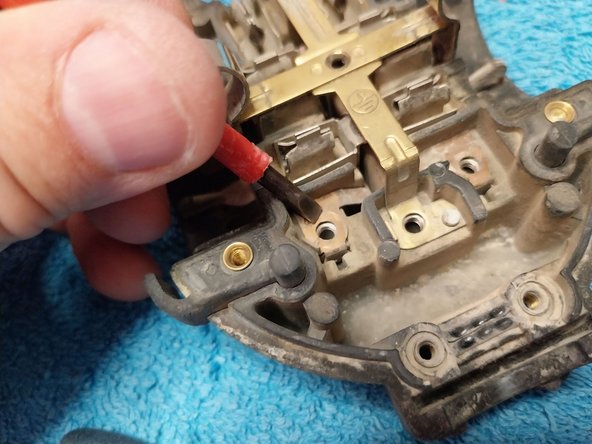
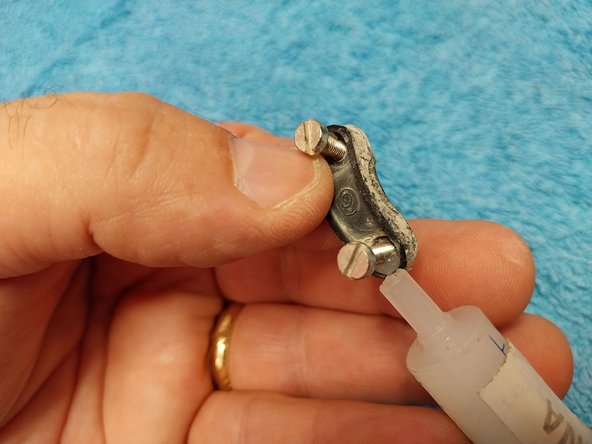
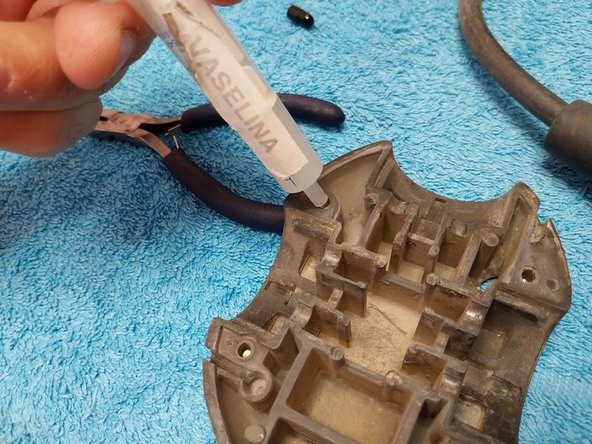
    • We prepare the cable press to reposition it, in the holes we can apply a little petroleum jelly, which will make it easier for the screws to enter smoothly, and for future repairs to come out easily.

  23. Troubleshooting DIY cable reels.: step 23, image 1 of 3 Troubleshooting DIY cable reels.: step 23, image 2 of 3 Troubleshooting DIY cable reels.: step 23, image 3 of 3
    • At the base of the cable gland screws, if we apply a little Vaseline, they will adapt perfectly to the shape of the cable gland when tightening them.

  24. Troubleshooting DIY cable reels.: step 24, image 1 of 3 Troubleshooting DIY cable reels.: step 24, image 2 of 3 Troubleshooting DIY cable reels.: step 24, image 3 of 3
    • A little Vaseline on each of the 4 screws, so that they screw smoothly and we can close the 2 halves.

  25. Troubleshooting DIY cable reels.: step 25, image 1 of 3 Troubleshooting DIY cable reels.: step 25, image 2 of 3 Troubleshooting DIY cable reels.: step 25, image 3 of 3
    • Photo 1: We insert the 4 screws.

    • Photo 2: We will check continuity between input and output of the 3 cables.

    • Photo 3: We can proceed to assemble the plug socket

  26. Troubleshooting DIY cable reels.: step 26, image 1 of 3 Troubleshooting DIY cable reels.: step 26, image 2 of 3 Troubleshooting DIY cable reels.: step 26, image 3 of 3
    • To assemble the socket, we use the same methodology explained in other previous steps.

  27. Troubleshooting DIY cable reels.: step 27, image 1 of 3 Troubleshooting DIY cable reels.: step 27, image 2 of 3 Troubleshooting DIY cable reels.: step 27, image 3 of 3
    • Since it is a plug socket with a rubber cover, to assemble it more easily we can apply a little Vaseline so that the cover fits smoothly.

    • Once this is done, it is time to check the neon lamp, which is also faulty. We remove the screws from the side cover.

  28. Troubleshooting DIY cable reels.: step 28, image 1 of 3 Troubleshooting DIY cable reels.: step 28, image 2 of 3 Troubleshooting DIY cable reels.: step 28, image 3 of 3
    • The lamp is not melted, but it is very deteriorated, it hardly emits light, so I proceed to replace it.

    • Instead of replacing all the cable, since the cable of the new lamp is very fine, we join the new lamp, 2 pieces of white cable from the original lamp, since this cable is of greater diameter and quality.

  29. Troubleshooting DIY cable reels.: step 29, image 1 of 3 Troubleshooting DIY cable reels.: step 29, image 2 of 3 Troubleshooting DIY cable reels.: step 29, image 3 of 3
    • The spare lamp cables are welded to the 2 white cables of the original lamp, and are lined with insulating tape or retractable thermo tube, they can also be joined with electrician strips.

  30. Troubleshooting DIY cable reels.: step 30, image 1 of 3 Troubleshooting DIY cable reels.: step 30, image 2 of 3 Troubleshooting DIY cable reels.: step 30, image 3 of 3
    • Cable reel repair, indicator lamp working.

Finish Line

One other person completed this guide.

Special thanks to these translators:

es en

100%

V00mie is helping us fix the world! Want to contribute?
Start translating ›

0 Guide Comments

Add Comment

View Statistics:

Past 24 Hours: 3

Past 7 Days: 10

Past 30 Days: 61

All Time: 626