Introduction
Is this the Droid we're looking for? Why yes! Yes it is! We've acquired the latest smartphone on the market, the Motorola Droid 2. Join us as we break down this Droid into its most basic components.
What you need
-
-
The Droid 2 features:
-
Texas Instruments OMAP (Open Multimedia Application Platform) 1GHz processor with dedicated GPU.
-
8 GB internal storage space.
-
5 MP camera with auto focus.
-
3.7" WVGA display
-
Android 2.2 OS (Froyo)
-
The Motorola Droid 2 measures 4.58" x 2.36" x 0.54" and weighs in at 5.96 oz.
-
Taking a page from Apple, the Droid 2's nifty and compact packaging is a sight to be admired.
-
-
-
Side-to-side comparison of the Droid (left) and Droid 2 (right).
-
If you have a broken original Droid, check out our Droid repair manuals before forking out the cash for the new Droid 2!
-
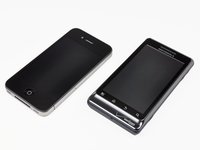
The new Droid 2 looks sleeker than its predecessor with the dark blue finish and slight modifications to the case.
-
-
-
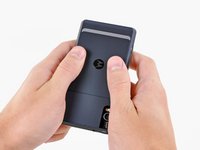
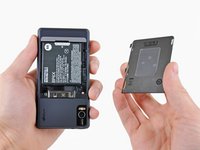
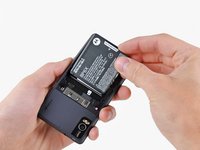
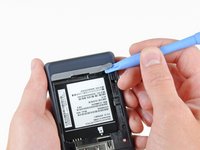
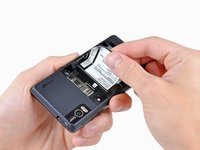
Unlike the iPhone 4 with its "Authorized Service Provider Only" pull tab, the Droid 2 has a helpful note stating "battery removal here." Thanks, Motorola.
-
Along the top side of the battery is one of the two visible moisture damage markers. The other is found to the left of the microSD card.
-
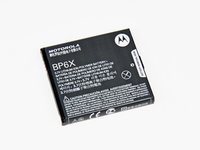
The Droid 2 has a 3.7V, 1390 mAh Li-Ion Polymer battery, providing up to 9.5 hours of talk time.
-
-
-
-
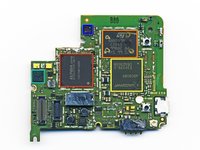
Big players on the front of the motherboard include:
-
Qualcomm QSC6085 CDMA Processor
-
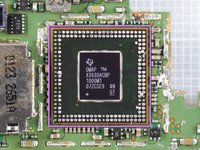
Elpida K4332C1PD-50-F - 512MB Mobile DDR3 RAM for the OMAP3630.
-
TI OMAP 3630 is secreted underneath the Elpida package (thanks Chipworks!).
-
Numonyx NANDA9R4N4 NAND/DRAM package that supports the QSC6085 CDMA processor. DRAM is most likely for the camera processor, while the NAND may be holding software for functions like the GPS.
-
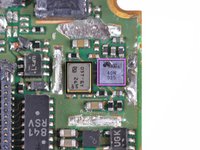
AKM 8973N 019A Compass
-
S202 7927 microphone
-
-
-
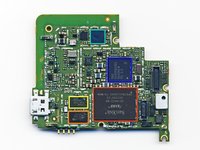
Back of motherboard:
-
SanDisk SDIN4C2 8 GB NAND flash
-
TriQuint TQM613029 CDMA PA-Duplexer Module
-
Avago FEM-7758 CDMA Front End Module
-
TI 51001582002 Power management IC
-
TI WL1271B WLAN Bluetooth/FM chip
-
ST G 40N 025
-
Unidentified OST chip
-
-
-
The Droid 2's 5 MP rear-facing camera with dual-LED flash supports DVD-quality video recording at 6 more FPS than the original Droid - 30 fps vs. 24 fps.
-
Yet the camera board doesn't look all too different than the one equipped on the original Droid.
-
-
-
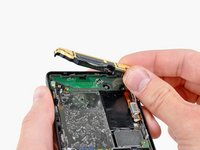
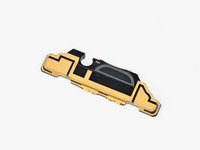
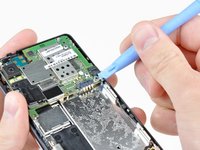
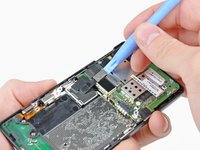
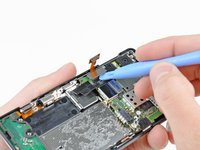
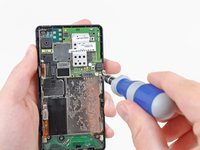
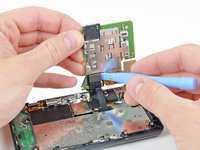
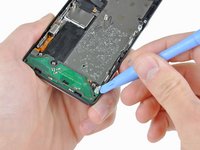
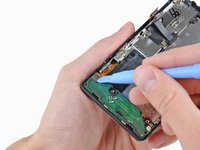
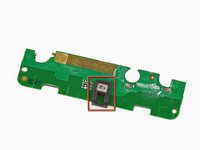
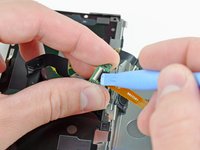
After disconnecting an antenna connector and a ribbon cable leading to the vibrator motor & control buttons, the small board at the bottom of the Droid 2 can be removed.
-
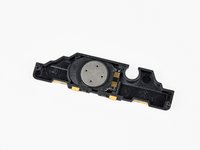
Between all the web-browsing and texting, when you make the occasional call on your Droid 2, this microphone lets you be heard.
-
-
-
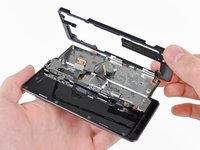
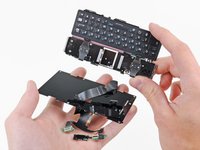
After de-routing the ribbon cable through the slider mechanism, the keyboard can be easily removed from the back of the slider bracket.
-
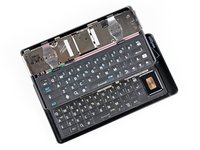
The second picture shows both Droid keyboards, with the Droid 2 obviously being on top.
-
A large D-pad panel was ditched for individual direction keys, a new record button was added, and the enter button was enlarged to more resemble a traditional keyboard.
-
































7 Guide Comments
I reviewed the iPhone 4 teardown and the construction of its parts looks a whole lot better than the Droid. I also was surprised to find so many screws behind glued on labels. I just think the iPhone is a better constructed device. The parts look good whether they're all put together or taken apart.
Now, where's the TI OMAP?
The TI OMAP is located under the Elpida chip.
