Introduction
Capacitors are electronic components found in almost every device containing a circuit board. Large capacitors can store enough charge to cause injuries, so they must be discharged properly.
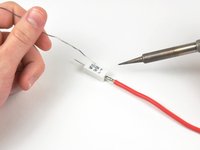
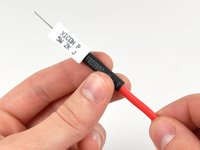
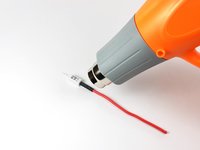
This guide will show you how to make a simple resistor-based capacitor discharge tool.
What you need
-
-
To construct a capacitor discharge tool, first gather the necessary materials. These include:
-
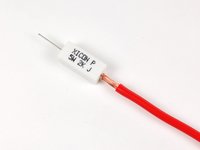
Two lengths of wire. Minimum wire requirements is 12AWG, 600 volt rating for large electrolytic capacitors used in power supplies, electric motor start circuits and camera flash circuitry
-
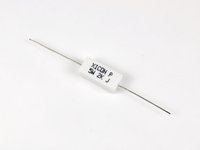
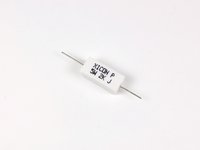
A resistor rated to dissipate the amount of thermal energy created when discharging the capacitor. Minimum requirements for resistor is 2k OHM 5w for small capacitors, 20k OHM 5w for large electrolytic capacitors used in power supplies, electric motor start circuits and camera flash circuitry.
-
Shrink tubing
-
-







Cancel: I did not complete this guide.
146 other people completed this guide.


16 Guide Comments
thank you !!! :)
This article is by far the best I've read. I have made these in the past and had to get past the amount of words used to describe what needed to be done with what. This article is straight to the point and the tips ( using alligator clip ) are excellent.
I get the basics and can build something more to fit my needs, with what you have instructed
hi
i have one query, if it is possible to discharge the capacitor in 12V 1 A power supply..? if i cut of the power, the power supply discharge the power around 6 sec but i need to discharge it with in 1 sec ..? this is possible or Not...?
Thank you! I have been looking for a good diy discharge probe....I also used overlapping large size heat shrink to strengthen the joint at the ceramic resistor to prevent failure at a bad time.
