0
Score
Majesty
12.2k
Asked
Why is my receiver getting so hot?
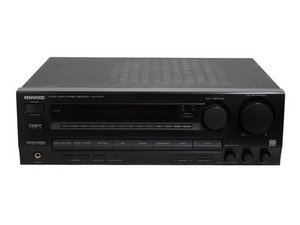
My Kenwood receiver always got pretty hot, so I purchased a fan which alleviated the problem. that was months ago. Now, the receiver gets so hot that in a matter of 10-15 minutes the sound becomes distorted, what can be causing this?
NOTE: this receiver is pretty old, but I'm not ready to let it go yet.
1
Score
Chris Green
14.9k
Answered
Accepted Answer
It could be a bad component, or a dead one. Some receivers have heatsinks that cool down certain components, and yours is probably overheating, and the audio processor is dropping out. I have an older Kenwood surround receiver (Late 1990's) in my house, and it does heat up a little, but doesn't drop out the sound. You might want to open it up, and have a look inside for any obstruction of the cooling mechanisms, like dust, and corrosion.
Yeah, I did that and blew all the guts out with compressed air, I don't see anything out of the ordinary. Do you think it's time for a new one?
maybe, you could try running it open, and feeling around for the components that are getting hot. You could try and use something to cool them down, i believe that RadioShack sells mini adhesive heatsinks for things like RAM chips, and and processors,, they might work.
1
Score
Jack Dedert
25
Answered
My KRV-7070 shuts down when it gets too hot. It is either off or on, so your problem is interesting. You didn't mention whether the receiver's built-in fan was working. They can fail, as can the circuitry that turns them on. Also, check that the 8 ohm/4 ohm switch is in the proper position.
Finally, make sure there is adequate ventilation around the receiver. Nothing should be placed on top of it. In fact there should be at least a couple of inches above it, on both sides and behind.
1
Score
Fred
115
Answered
Class A receivers such as this are designed to operate in a very inefficient portion of the amplifier performance curve, and then naturally generate lots of heat. Your unit is heating to the point that the amplifier is operating in another region of its performance curve, causing the distortion. I suggest the right place to look is in the final amplification stages, which have large transistors with large heat sinks. Go to Radio Shack and get their cooling spray for troubleshooting
Once you've found the circuit, the advice changes. Can you solder, without damaging surrounding components? As much heat as one of these power transistors needs to remove it, there's a danger of delaminating circuit board runs. Be careful.